
Traces of Life No. 3
Death Valley is vast in a way that’s hard to fully grasp until you spend time moving through it. The park stretches for miles in every direction, and each area feels like its own world, shaped by different light, terrain, geology and rhythm. Even after multiple visits, there are places that still feel unfamiliar.
During my recent workshop, I brought the group to one specific area of the park that I know well. It’s a place I’ve returned to often, walking the same dunes under different conditions, watching how the light changes as the day unfolds. Familiarity here doesn’t dull the experience. It sharpens it.
I know how the light moves across these dunes as the sun begins to lower. There’s a short window when the light is still harsh, when contrast is strong and edges stay crisp. Too high and everything feels flat. Too low and the shadows soften. I was waiting for that in-between moment.
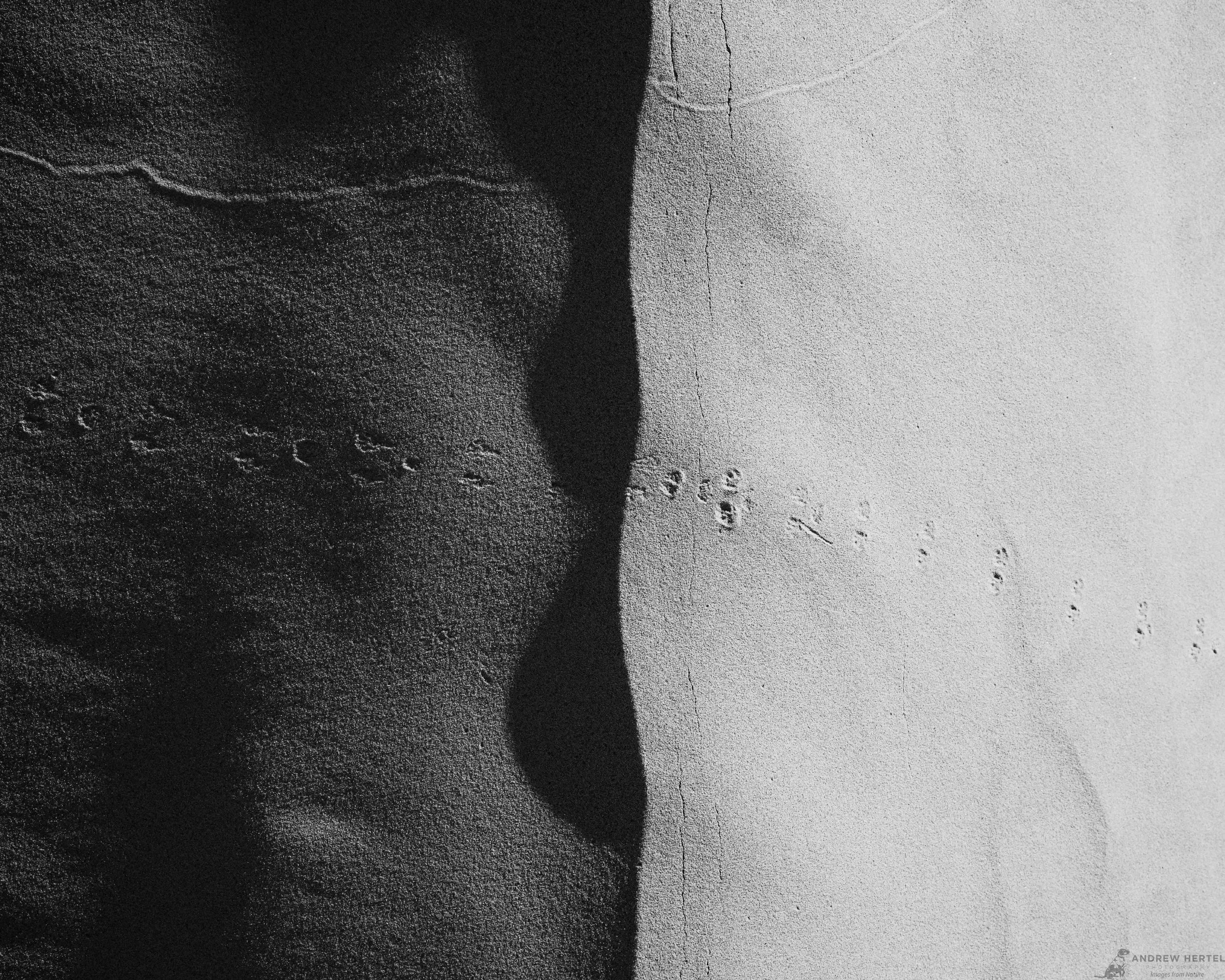
As we roamed the sand, this small scene revealed itself. Light and shadow split a single dune ridge, creating a quiet stage for movement that has already passed. Simple. Graphic. But running through the center were a set of kangaroo rat tracks, pressed cleanly into the sand. Just beneath the surface, faint beetle trails traced quieter paths, barely visible unless you slowed down enough to notice them.
This image is part of my ongoing Traces of Life series. It’s not about wildlife in the traditional sense. There is no animal in the frame. Instead, it’s about presence. Evidence that life moved through a place that, at first glance, feels inhospitable and empty. In an environment defined by heat, wind, and constant change, these small marks speak to resilience and adaptation, quiet reminders that life not only exists here, but persists. Like the landscape itself, these traces are temporary, soon to be softened and erased by wind and time.
I often encourage my students to slow down and look down, especially in places like Death Valley where the grand scenes can dominate your attention. The dunes will always be there. But these smaller moments are fleeting. They exist briefly, quietly, and only for those willing to pause.
What drew me in here was the balance. Light and shadow. Stillness and movement. The permanence of the dune against the temporary nature of the tracks. Harsh light wasn’t something to avoid in this moment. It was essential. It gave the scene its structure and tension, allowing the traces to stand clearly against the surface of the sand.
Photographs like this remind me why I return to familiar places. Knowing the landscape removes urgency. It creates space to notice subtle shifts and quiet stories unfolding underfoot. Sometimes the strongest images aren’t found by looking farther, but by paying closer attention to what’s already there.
