
There's a version of Zion National Park that most people know. The red walls, the Virgin River, the crowds moving through the canyon on summer shuttles. It's one of the most visited national parks in the country for good reason, it's extraordinary. I've been here enough times to know exactly what to expect.
And then Seth called.
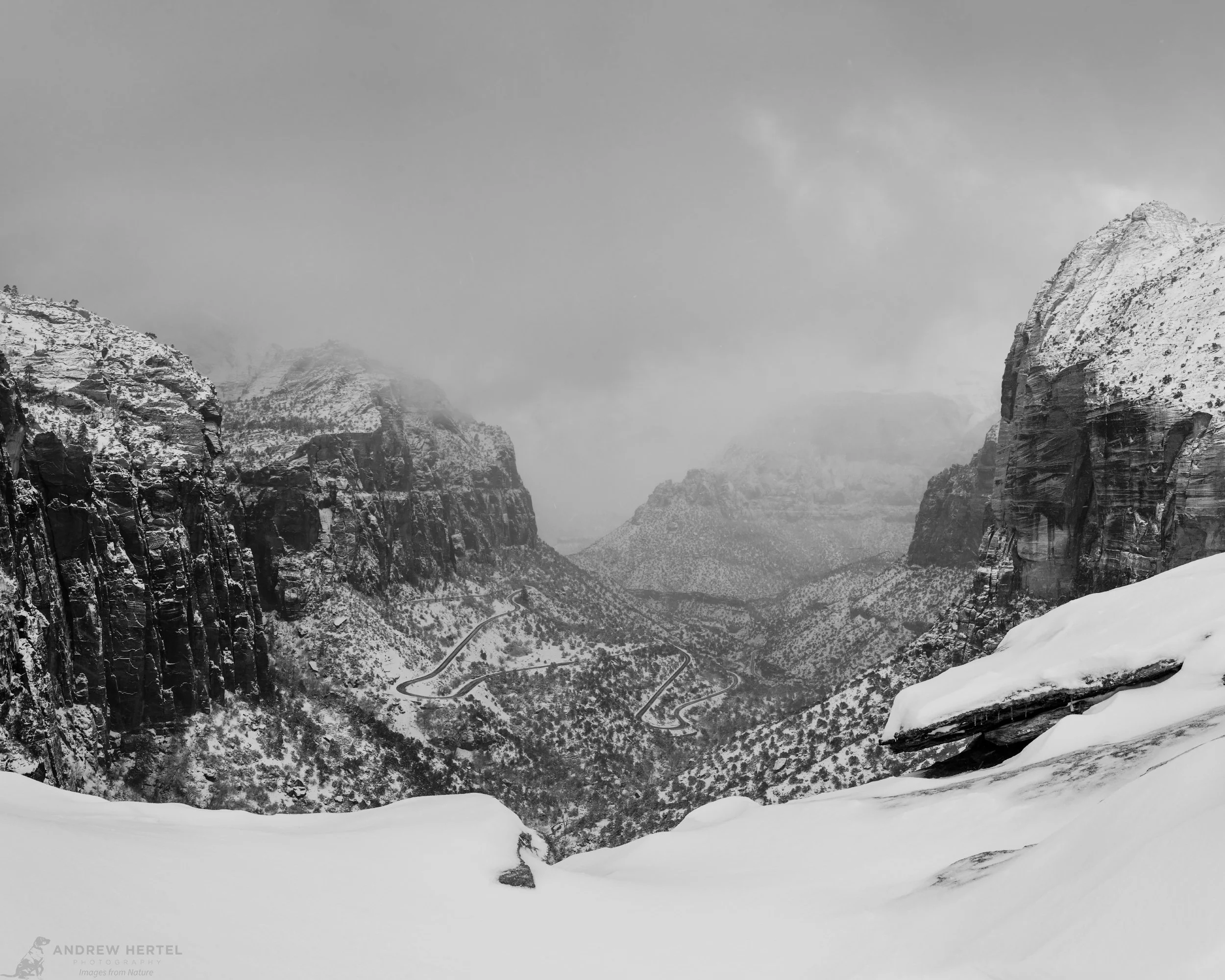
My good friend Seth lives out in southern Utah, he has spent 15 years guiding inside the park, he knows it like most people know their own backyard. He told me a major winter storm was coming through, the kind that doesn't happen all that often in the desert, and that I needed to be there. I loaded up the truck and drove up from San Diego. What I found when I arrived was a place I didn't recognize.
Fresh snow changes everything. The canyon walls that I've photographed in every kind of light looked completely different with snow falling so thick visibility was almost none. The crowds were gone. The silence was total. I stood in the middle of it all feeling equal parts disbelief and amazement — this was the same place, and it wasn't the same place at all.
Seth took me to parts of the park I hadn't been to before, the Kolob Terrace, a remote section that most visitors never find, where the snow was deep and the walking was slow and there was nobody around for miles. Then up to Canyon View Trail the next morning before dawn, the road completely buried, the storm still refusing to let go. At the top I found a lone tree on the cliff edge with the canyon disappearing into white beyond it. I spent a long time with that tree — it deserved more than just a glance. That's the thing about weather like this, it strips the familiar away and leaves you with something rawer, something that asks you to really look.
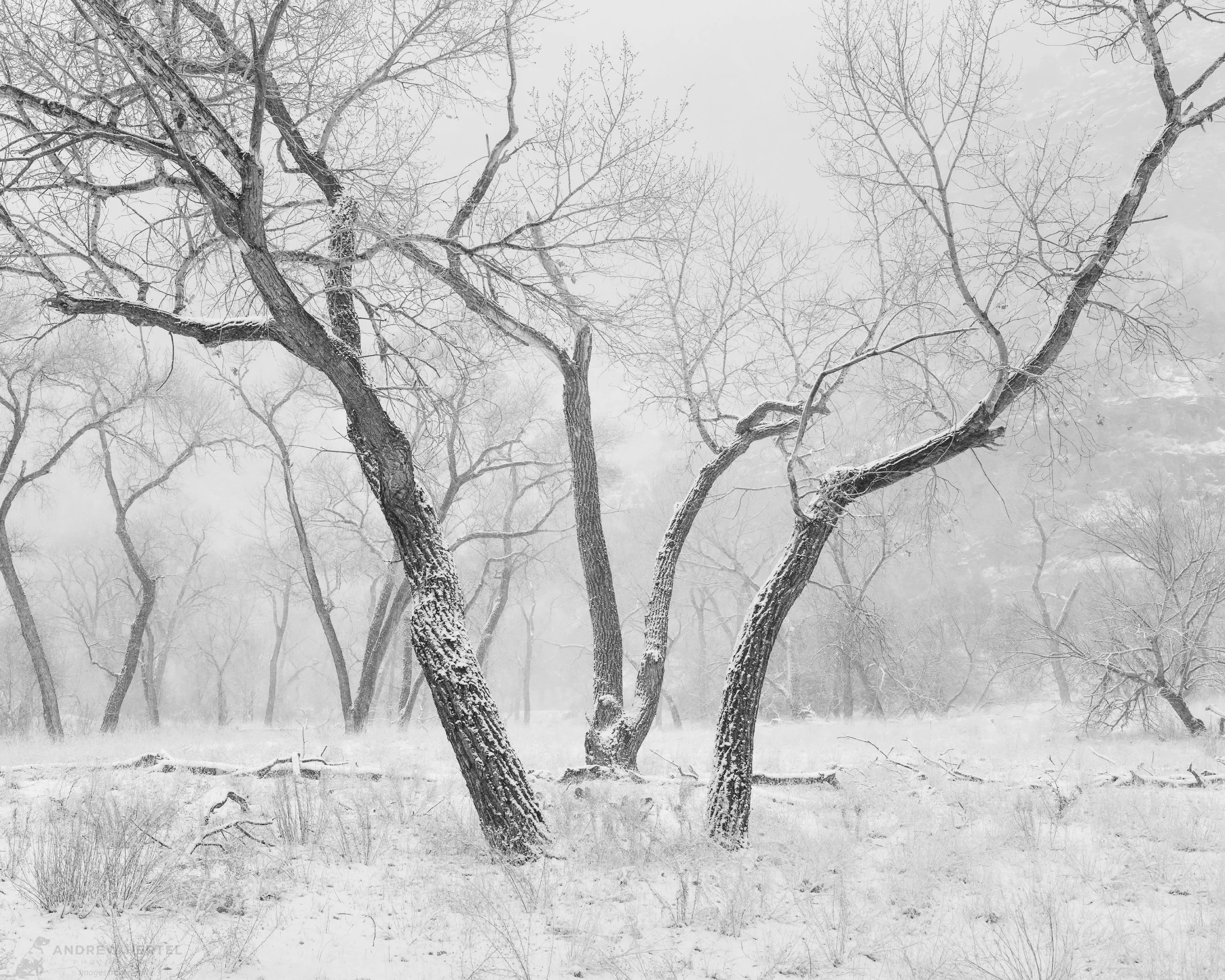
For most of those first days the grand landscape simply didn't exist, the storm had swallowed it. The canyon walls disappeared into cloud, the peaks were gone, the scale that makes Zion what it is was buried under white. And something interesting happened. When the big picture disappears, you start finding the small ones. Dark branches loaded with snow. The texture of ice forming along a stream edge. A single tree holding its shape against a featureless sky. As a black and white photographer I was in my element, all that contrast, all that tonal range, the world reduced to light and dark and quiet detail. My brain was in overload. The storm didn't limit what I could photograph. It changed what I was looking for.
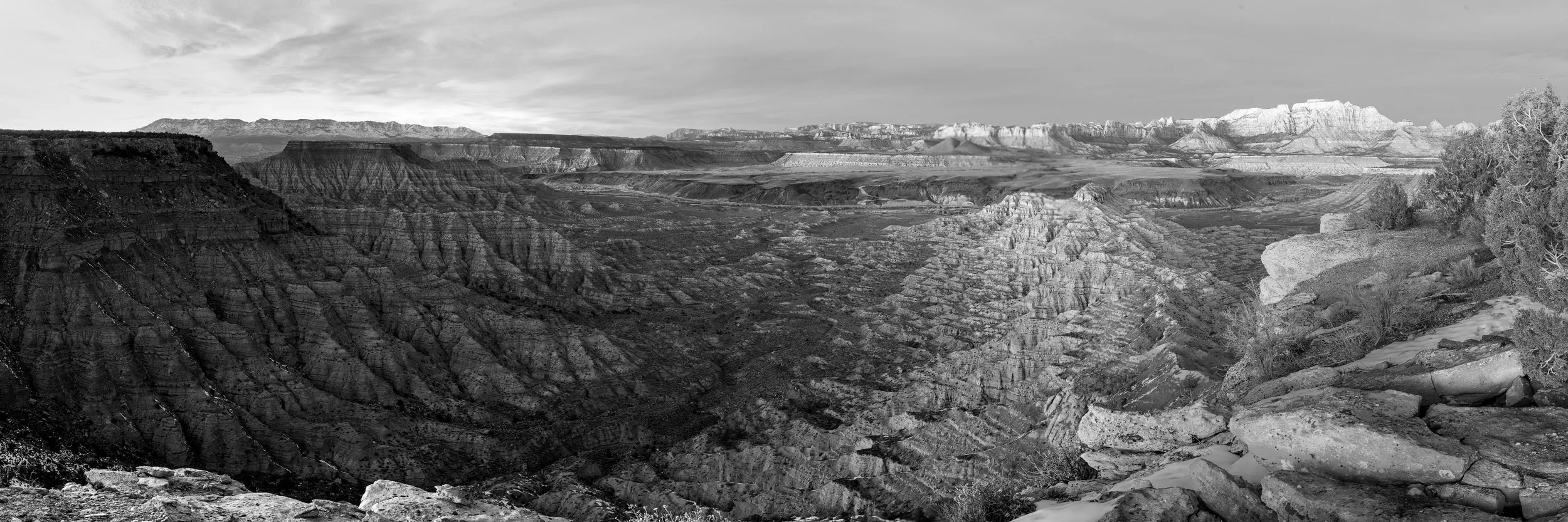
A quick side trip to Bryce Canyon for sunrise, then back to Zion where Seth led me to a secret area outside the park where we stood on cliffs high above a canyon that I never would have found on my own. Standing up there with the whole of the canyon falling away below, Zion stretching out in the far distance, I felt the scale of the place settle into me in a new way. Some locations do that. They recalibrate something.
The finale was The Subway, a hike that earns its reputation. You work for every mile of it, moving through the canyon bottom, crossing the stream over and over, navigating boulders in winter conditions that make the whole thing more serious than it looks on paper. It requires a permit arranged in advance, and in winter you'll want real gear — waterproof boots, neoprene socks, trekking poles, and of course water and snacks. But when you finally step inside the Subway itself, the rock curving overhead, standing in cold running water, light wrapping around the walls and going soft in a way I've never quite seen anywhere else, the effort disappears entirely.
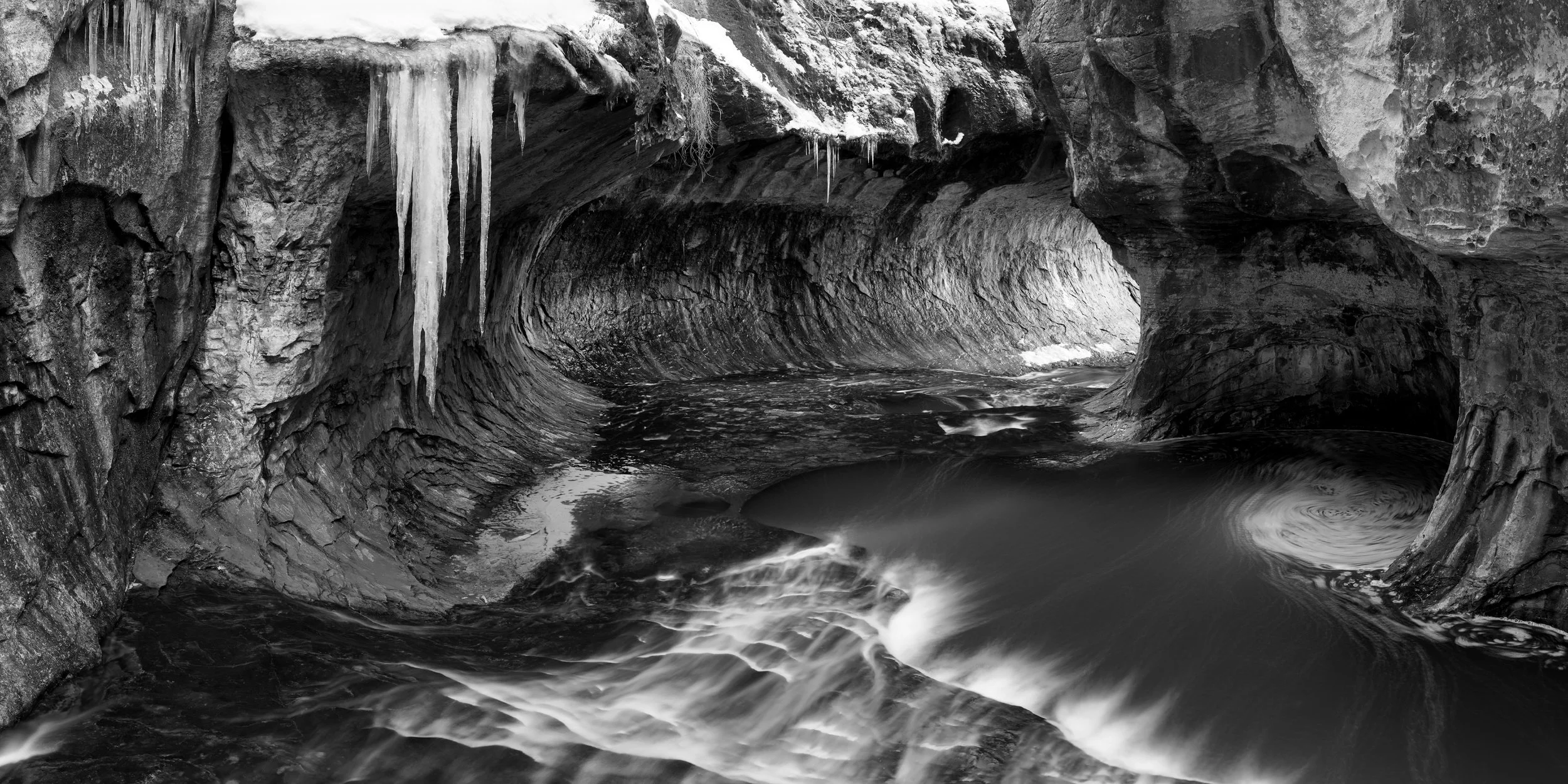
I made some images in there that I'm genuinely proud of. Not because I did anything technically remarkable, but because the place handed me something and I was paying enough attention to receive it. That's the best you can hope for with a camera in a place like that.
Almost as quickly as the white blanketed the red, it was gone. Four days in and the desert had already moved on, the snow absorbed, the canyon walls back to their familiar color, the place returning to the version most people know. I've been to Zion a handful of times now. I thought I knew it well.
Seeing a place you love become completely unrecognizable — that doesn't happen often. The snow turned Zion into somewhere I'd never been before, and for four days I got to wander through it with a camera and no agenda beyond paying attention. I won't forget what it looked like. I won't forget what it felt like to be there for it.
I don't think it'll be the last time I chase a storm.
As alway, thanks for following along. Until next time, keep seeking the extraordinary in the world around you.
Andrew
