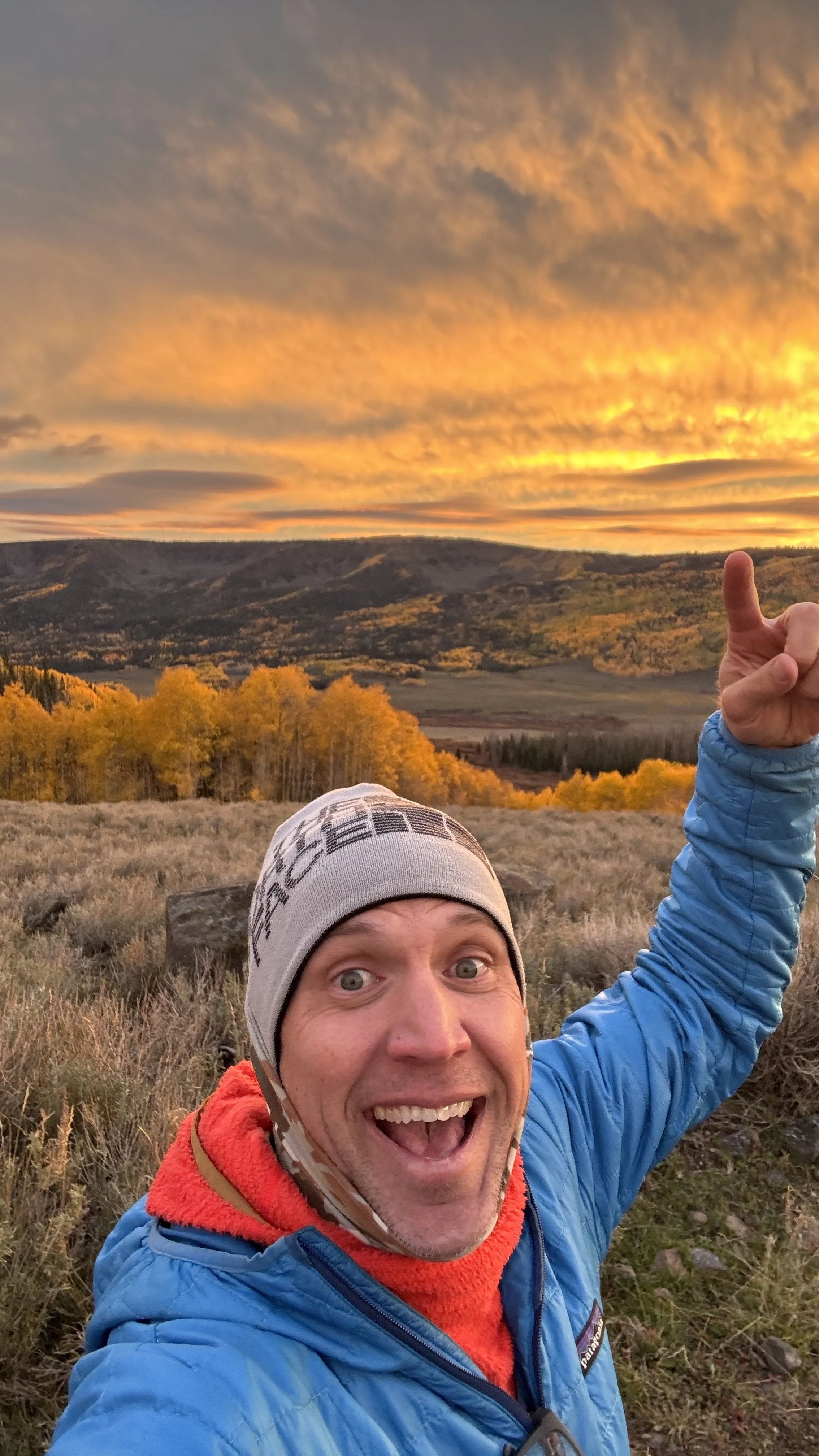
Why I Keep Returning to Utah for Fall Colors

The forecast called for a 100% chance of rain all day. By ten that morning, it still hadn’t arrived, but the sky looked ready to deliver. We drove down a seldom-used dirt road toward the aspens and a little lake we’d been hearing Hunter talk about for two days. The road grew more rutted as we went, but there was too much worth stopping for along the way.

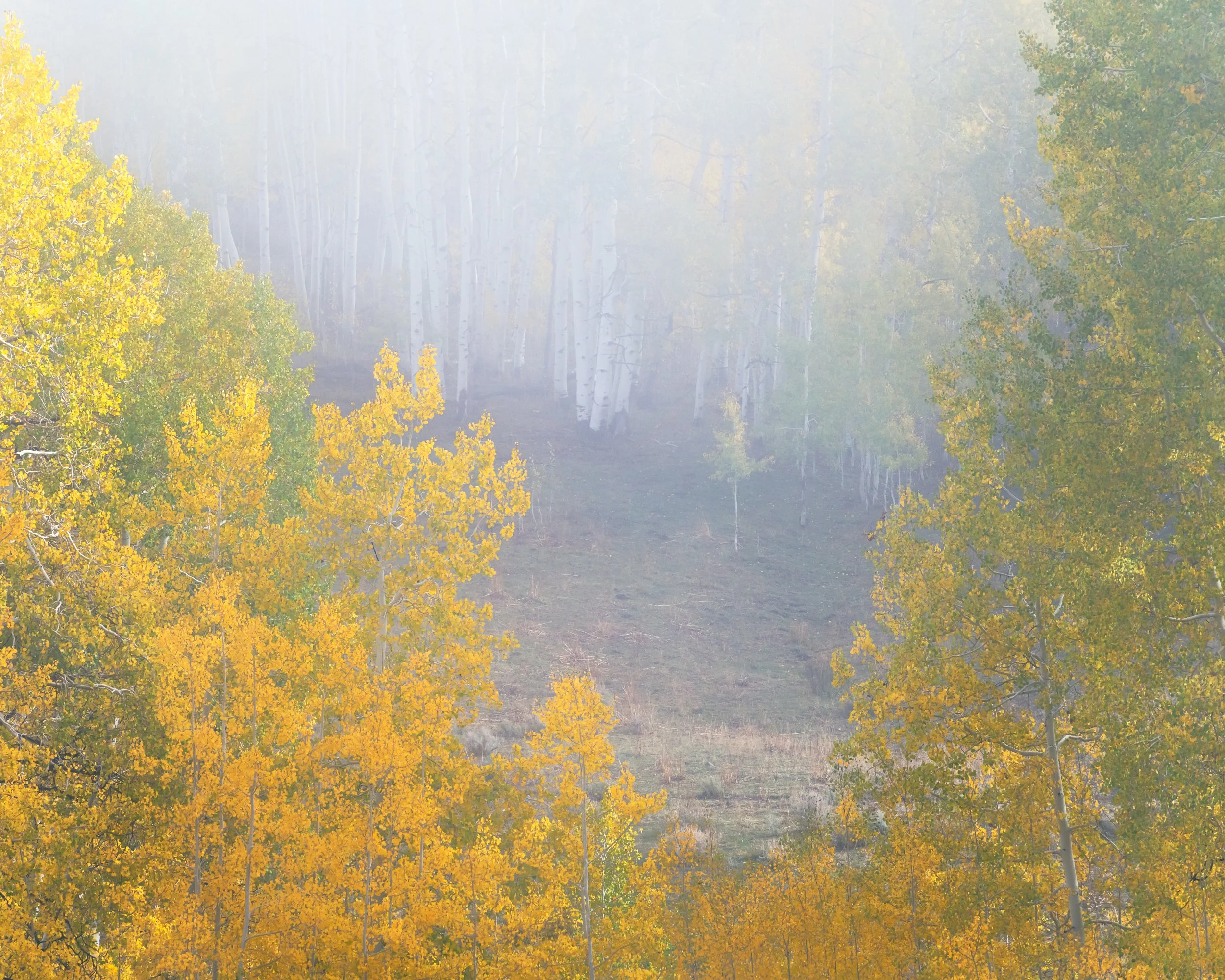
At the bottom of a small hill, we stopped beside a meadow and a grove of yellow aspens. Fog rolled through the trees, thinned, then rolled in again. The light had us all out of the trucks, photographing and hooting and hollering. When it faded, we drove up the slippery hill to the next grove. Up there, the fog was so thick at times that we could see only a few feet in front of us. We could photograph from outside the grove, then walk into it and find entirely different scenes.
Between the “oh my gods,” there were long stretches of silence as we all went to that other place, where your mind quiets and you’re completely absorbed in the scene in front of you. It’s one of my favorite parts of photography, and I love helping others find their way there. I walked around taking it all in, helping when someone needed me and making a few photographs of my own. The fog kept changing the scene, hiding trees farther away and letting a few pale trunks stand out. A grove that could have been visually overwhelming suddenly felt much simpler.
I’d come to Utah knowing I would be photographing fall color, but here I was thinking in black and white. The fog gave the trees depth and mystery, and I could concentrate on their shapes without so much competing for attention. As excited as I was about the golden leaves, I was even more excited about those white trunks disappearing into the fog. These were conditions I rarely get to experience back home in San Diego, and I wanted to make the most of them.


Every year, I look forward to returning to this part of south-central Utah to assist my good friend Hunter with his fall colors photography workshop. We stay in a remote setting in a national forest, surrounded by mountains and aspen groves. It feels like fall in a way that home doesn’t, can’t actually, fall in San Diego is just our second summer. I get to spend my days outside, help people improve their photography and deepen their appreciation of the natural world, and cook for the group during the workshop. It’s a combination I love. This year, we didn’t see another photographer the entire trip, a rare experience these days.

Hunter and I do the driving, giving everyone the chance to enjoy the views and concentrate on photography along the way. In the field, my teaching follows what each person needs. Sometimes that’s a specific camera question. Sometimes we look at a composition together, talk about what drew them to it, and find ways to simplify it. I point out scenes that catch my eye and explain how I see them, then help participants work through their own ideas.
It’s also one of the times of year when I arrive deliberately thinking in color. Fall color is the subject, and I’m happy to follow it. There’s a freedom in making photographs outside my usual black and white work. I feel free to experiment, see what catches my attention, and decide what belongs after I’ve had time to look at the images. The question I ask of a photograph stays the same, whether in color or black and white: does it work as a piece of art?
I’m not going to lie, I do struggle a good bit, especially at the beginning of the trip. Golden aspens covering rolling mountainsides are a real treat to witness, and I want to capture them in all their glory. But I struggle with the wide scenes. I’m normally not a wide-angle lens type of photographer. In fact, I don’t think I’ve used my 16–35mm lens since the previous years fall workshop.
Figuring out where to frame the edges is difficult when there’s so much going on. I often find myself taking a step back, hand on my chin, absorbing my surroundings and letting my eyes wander while I figure it out. If I try to force it, well, the delete button gets used. A lot!
Working in color and with those wide-open scenes brings welcome changes to my usual photographic choices. I look forward to the challenge every year. It makes me slow down, reconsider how I compose, and work through things that don’t come as naturally to me. Doing things we are not comfortable with is the only way to improve.


This year gave us plenty to work with. The trees were in all shades of autumn color, and a forecast that threatened two days of heavy rain delivered only a few sprinkles during daylight hours. The other two days gave us almost perfect conditions for photography. We had dramatic clouds and beautiful diffused light. Add a fantastic group of people, and it was easy to stay excited about what we might find next. One day, the conditions were so good we didn’t even stop for lunch. We just quickly shoved snacks in our faces and kept taking pictures.


Back on the road to Hunter’s lake, we eventually pulled ourselves away from the foggy grove and reached the water. On any other day, it might have been the highlight. After the rolling fog show, we needed a little time to appreciate what was in front of us, which feels ridiculous to say about a lake lined with beautiful golden aspens.
The wind was strong when we arrived, breaking the trees’ reflections into moving patterns. We worked with those more abstract possibilities until the wind eased and the reflections came alive. Aspens stood along one side, with more grass on the other and dead tree stumps rising from the water along one shore. There was plenty to explore once we settled in and started looking.


Days like these are why I look forward to this workshop every year. I get to help others work through their photographs while being challenged by my own, all in a landscape that feels so different from home. Even after several days immersed in fall, I’m never quite ready to leave.
After the workshop, Seth joined Hunter and me for our annual fall motorcycle riding and camping trip. Unfortunately, life got in the way, and I had to cut that part of the trip short, getting only a day and a half of riding with them. But we still had two evenings around a campfire, laughing, talking through some life changes I’m dealing with, and then laughing some more.
I’m grateful for any time I get to spend camping and riding with two of my best friends. The older I get, the more I realize how much I cherish these times: riding motorcycles, sitting around a campfire, and talking and laughing with friends.
I’m already looking forward to returning next fall. If spending a few days immersed in autumn, exploring with your camera, and learning alongside a small group sounds like your kind of trip, I’d love to see you there. You can find the details for the fall colors workshop here.
As always, thanks for following along. If something here resonates with you or sparks a question, drop me a line. I’d love to hear from you.
Andrew