Why I Keep Returning to Sand Dunes

Me in my element at Ibex Dunes in Death Valley.
There are places I return to not because I expect something new, but because I know everything will be familiar yet different.
The sand dunes of Death Valley National Park are one of those places. I have walked the sand of Ibex Dunes, Mesquite Flat Dunes, and Eureka Dunes more times than I can count, and yet I see them differently each time I return. Even though I have been to these places before, I notice things I did not see previously. The way the light hits the landscape shifts. The wind has moved entire sections of sand. Visit in the morning and it is completely different than in the evening. Yet somehow, without even seeing it, I know what to expect. I know it will be amazing.
That is what keeps pulling me back to sand dunes, and why I love photographing them. This long relationship with the desert eventually became the foundation for my ongoing series, Aeolian Dunes. It is a body of work shaped by repeated visits, slow wandering, and an acceptance that no two moments, or surfaces of sand, are ever the same.
But it is not just the act of making photographs that draws me in. Wandering through the dunes slows time in a way few places do. Everything else in my mind fades, and what remains is simply what is in front of me. The light. The lines, shapes, and textures in the sand. The wandering becomes the point, and the photograph, when it happens, feels like a natural extension of being there.
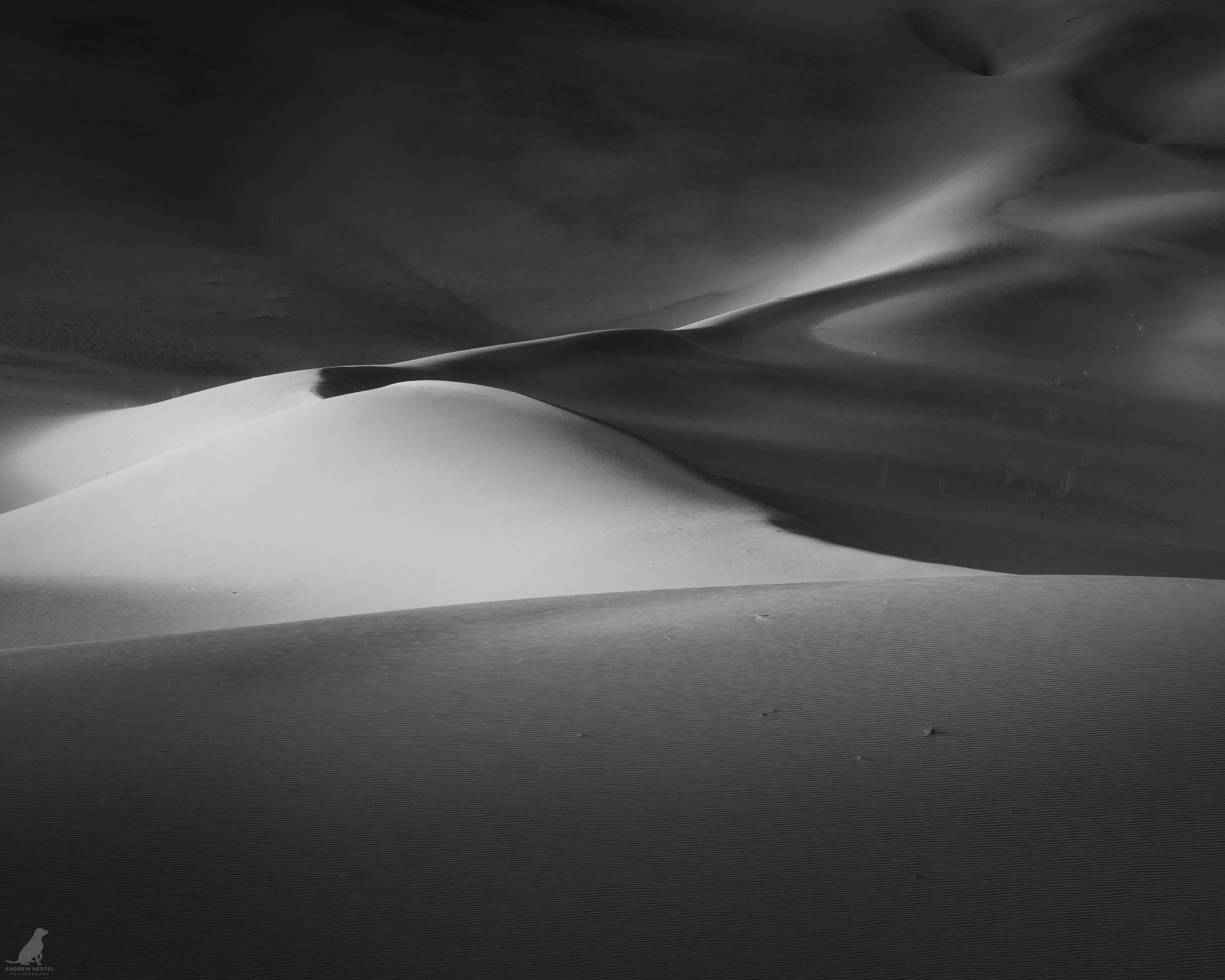
The Quiet Between - Ibex Dunes
A Landscape That Refuses to Sit Still
Sand dunes are not static. They live and breathe. They shift and move. They erase and reshape with each storm. They are the same, yet different, every visit.
Wind redraws the surface while we sleep. Footprints vanish. Hard edges soften, while soft lines are shaped into hard edges. New lines appear where none existed the day before. Even standing still, you can feel that you are in a place that is actively becoming something else. In the absence of wind, the absolute silence of standing in a vast dune field is something that is hard to explain and should be experienced by everyone. It is not just silence. It is a moment that feels completely void of sound.
Light plays its own role in this transformation. A low sun reveals texture and form, carving contrast into the sand. An overcast sky flattens everything into subtle tones. Harsh sunlight can create contrast through shadows and highlights. A few minutes can be the difference between a scene full of structure and one that feels almost abstract. There is no bad time to wander these places with a camera in hand, as long as you arrive with an open mind.
The dunes remind me that nothing here is permanent. Not the shapes, not the patterns, not even the photographs we make of them.
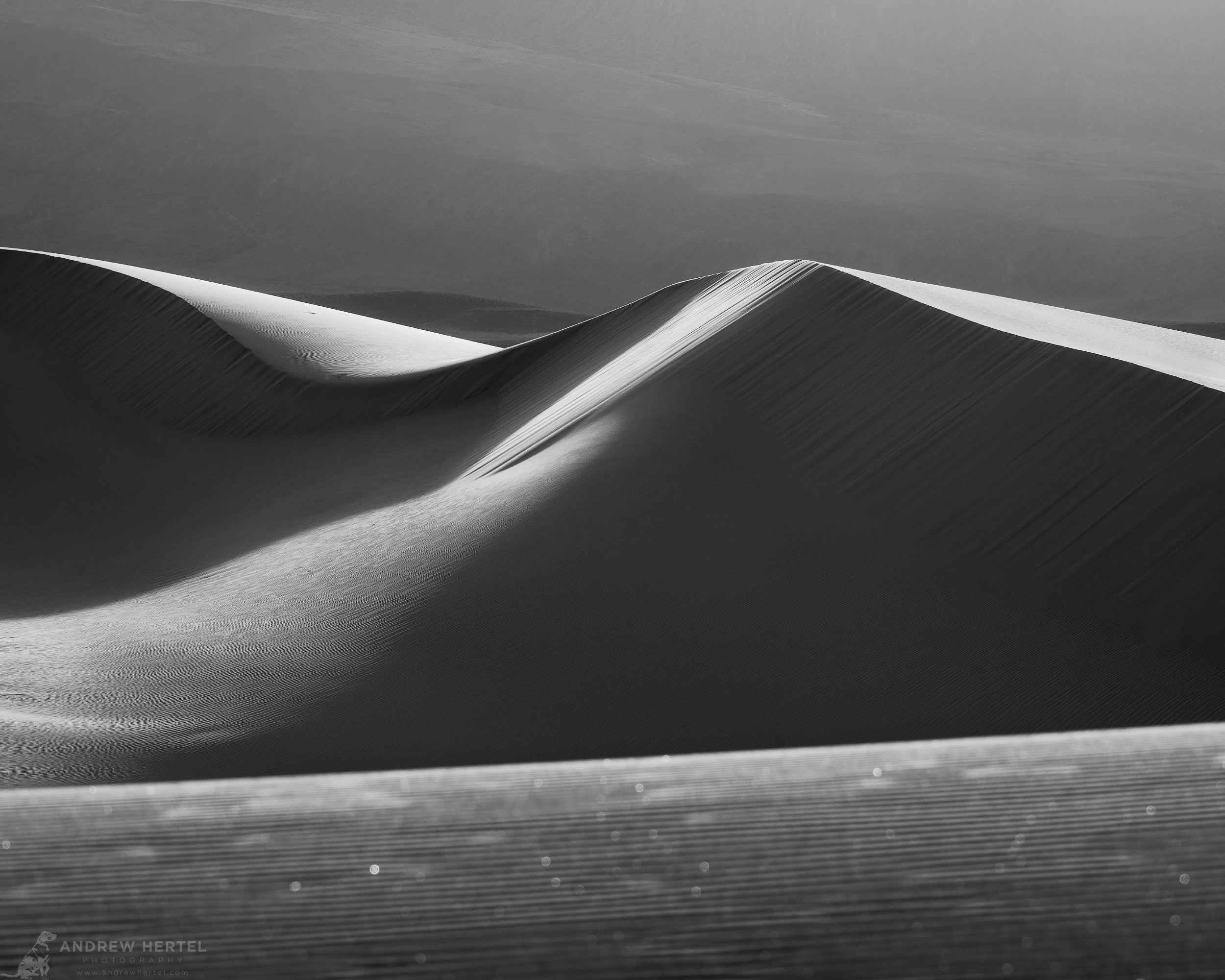
Aeolian Dunes No. 3 - Eureka Dunes
Aeolian Dunes No. 1 - Eureka Dunes
Walking Without an Image in Mind
When I head out into the dunes, I rarely have a specific photograph in mind. I might have a general feeling I am chasing, quiet, balance, simplicity, but not a fixed composition.
I walk. I stop. I look down. I look back over my shoulder. Sometimes the best lines are behind you, already half erased by the wind. Sometimes the best lines are over the next ridge.
Perspective matters more here than almost anywhere else. A small shift left or right can completely change how a dune presents itself. Sometimes lowering my viewpoint reveals unexpected shapes and shadows. Other times, gaining a bit of height simplifies the scene in ways I didn’t anticipate. Even changing from a wide lens to a telephoto can transform the experience into something entirely different.
The dunes reward patience, but they also punish expectation. If you arrive determined to recreate an image you have seen before, chances are you will miss what is happening right in front of you. I use this approach in most of my work, but especially when photographing sand dunes. Expectations do not allow my mind to be creative, and it shows in the images. I need to be free from the constraints of chasing a particular outcome and let my eyes and instincts roam, allowing the work to form organically. I have to feel it.
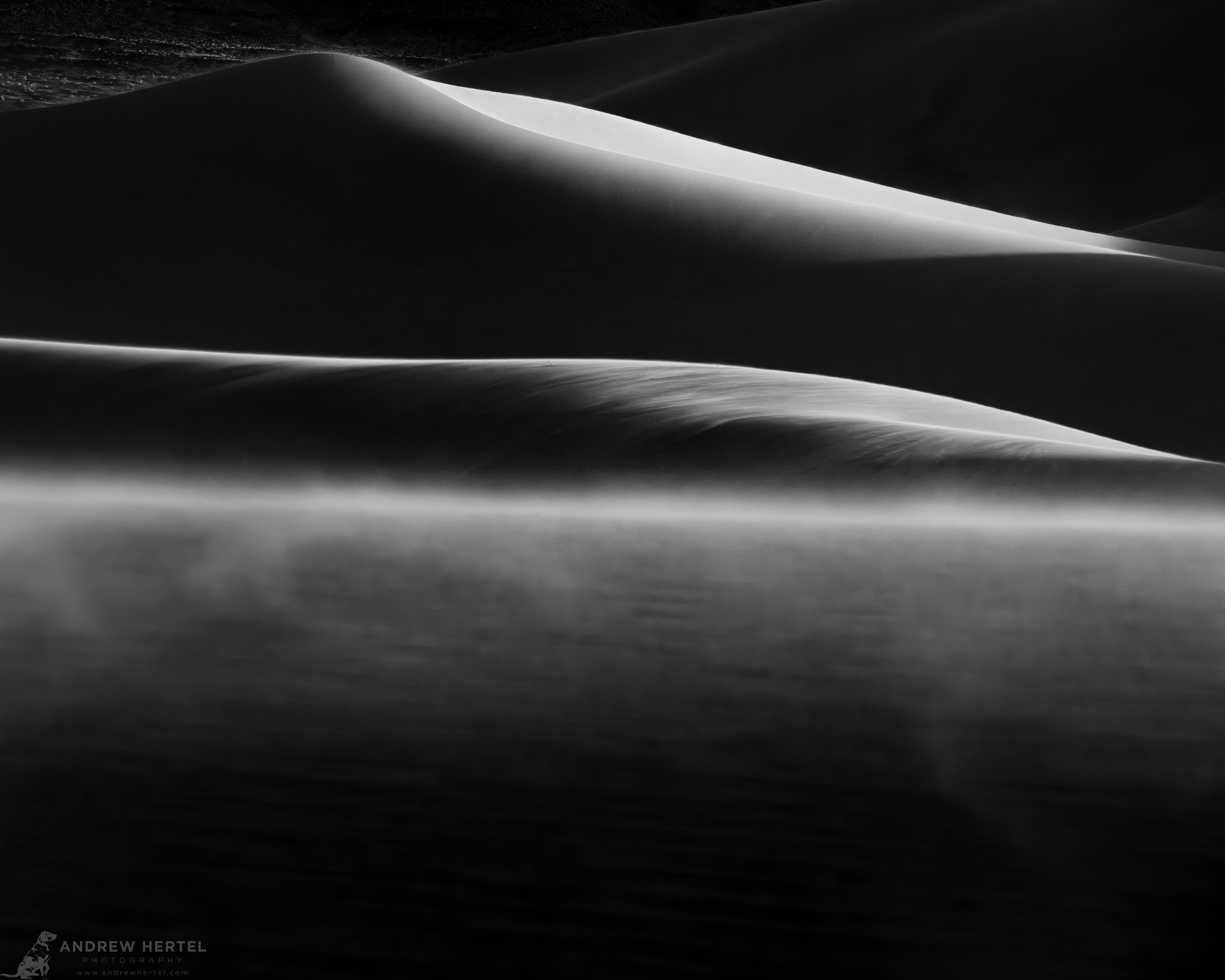
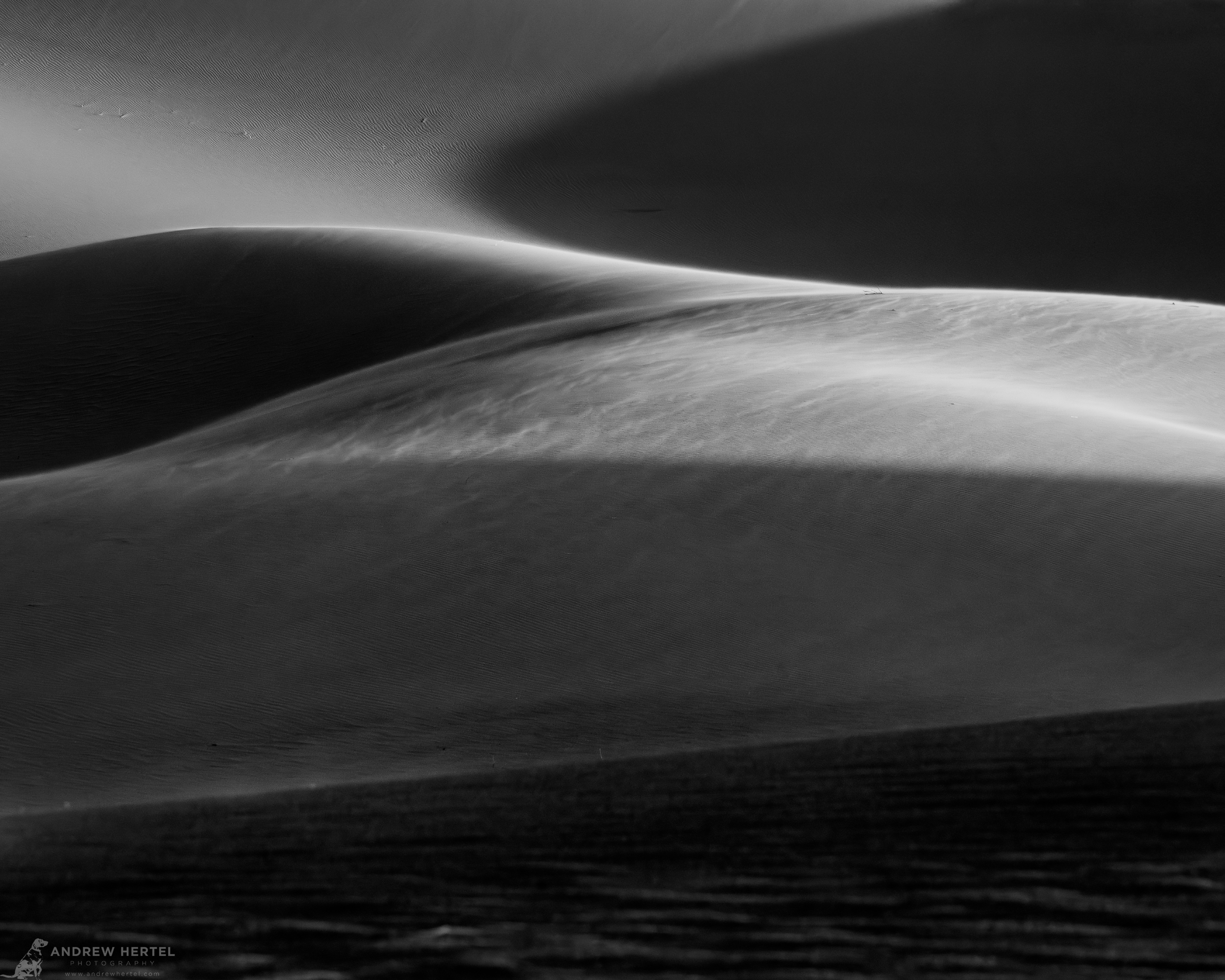
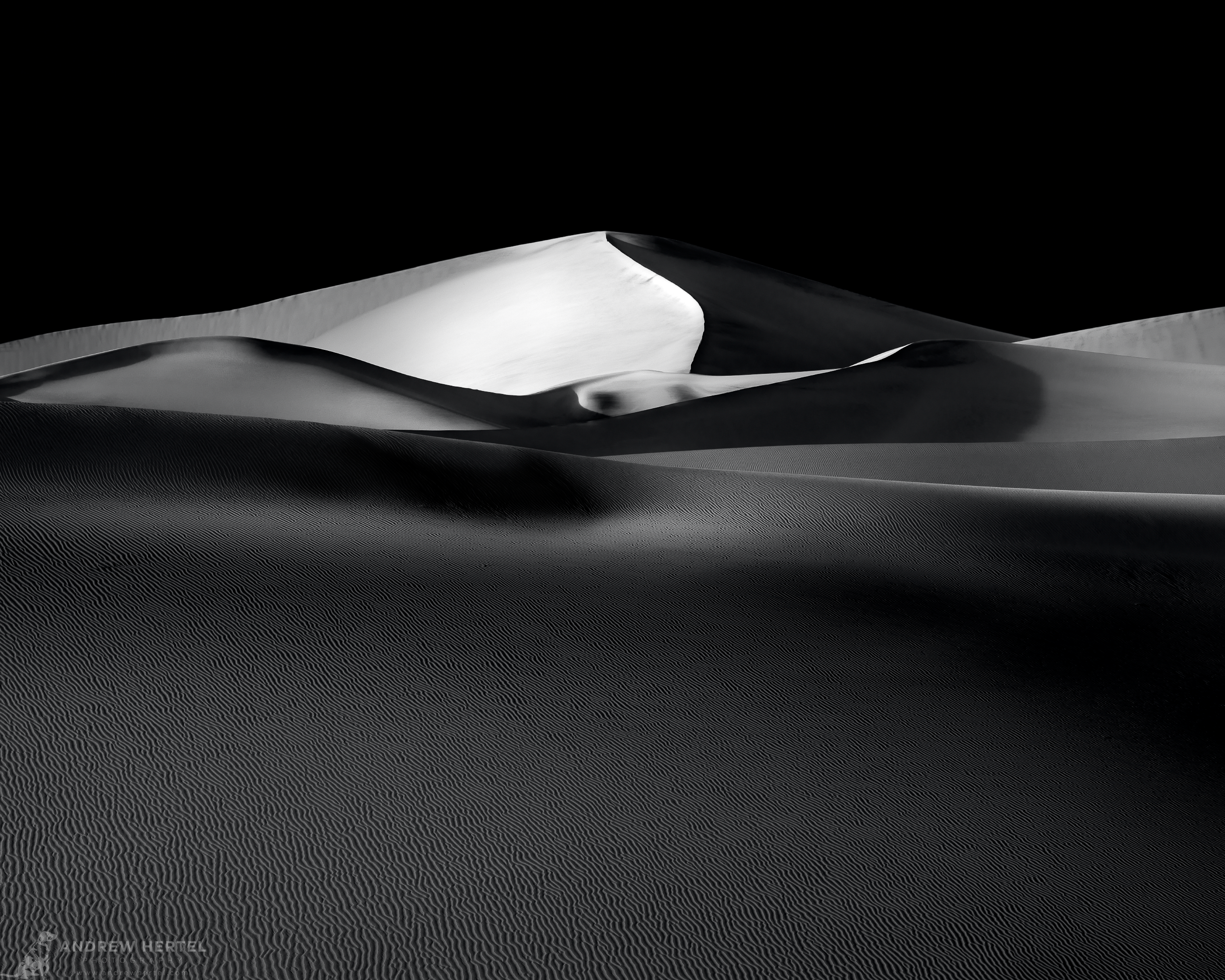
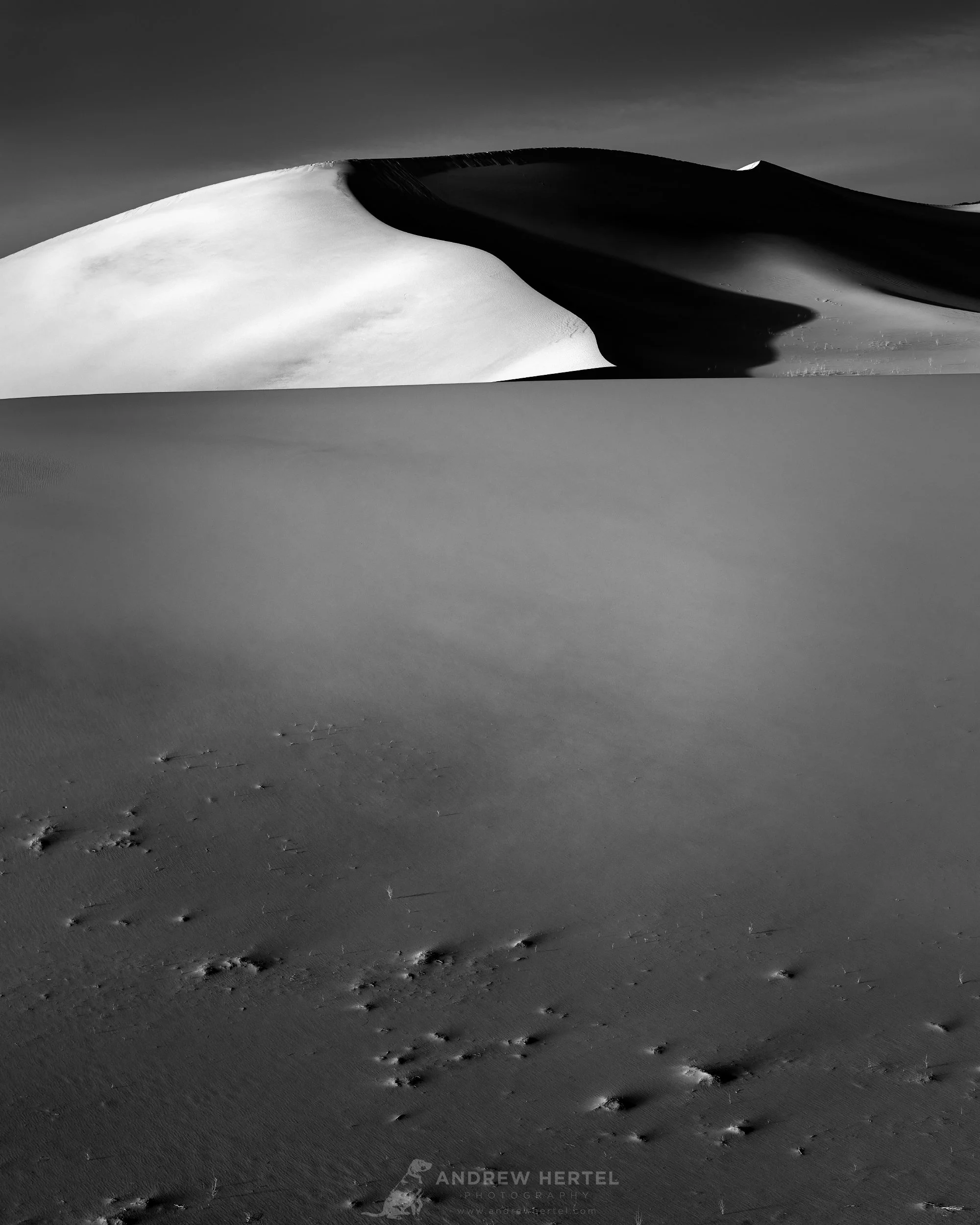
Four images from Ibex Dunes taken within 6 minutes of each other, completely different by moving my feet, my camera position and my lens focal length.
Teaching Impermanence Through the Dunes
When I teach my workshops in Death Valley, the dunes are one of my favorite classrooms.
Not because they are easy, but because they are honest.
You cannot rely solely on familiarity, even in a place you know well. The scene you photographed yesterday does not exist today. The dune you had in mind is lit differently. Clouds appear where there were none before. Footprints cut across clean lines. Wind or no wind can drastically change a scene. This forces a different mindset, one rooted in observation rather than control.
Photographing sand dunes pushed me to develop the ability to see and create quickly. And when I say see, I mean seeing beyond the obvious. The grand scene with towering dunes and distant mountains is easy to recognize. The quieter scenes, the subtle curves, small shadows, and abstract patterns, are harder to notice and take time to learn how to see.
I often encourage students to slow down and spend time in one area. Watch how the light moves across the sand. Notice how shadows stretch and retreat. Look for shapes and patterns. Pay attention to how the wind subtly alters the surface while you are standing there. And when you think you have the image you want, change lenses and see how the scene transforms.
The lesson is simple, but not always easy to accept. It becomes less about collecting an image and more about taking the time to observe, then responding to what feels right in the moment.
Photography in the dunes becomes less about holding onto something and more about being present.
Traces of Life No. 1 - Eureka Dunes
Letting Go of the Need to Repeat Yourself
It is tempting to chase the familiar. To return to a place and try to improve upon a previous photograph. Sometimes that works. Often, it does not.
The dunes have taught me that letting go of that impulse can be freeing. When I stop trying to repeat myself, I start seeing more clearly. I notice smaller scenes, quieter moments, and subtler relationships between light and form.
What I love most about these landscapes is that they remind me why I picked up a camera in the first place. Not to prove something, but to pay attention. To slow down. To appreciate the beauty of the natural world around us.
Aeolian Dunes No. 20 - Ibex Dunes
Traces of Life No. 3 - Eureka Dunes
A Living Landscape
The sand dunes of Death Valley are alive in their own quiet way. They are shaped by wind and time, and they refuse to stay still long enough to be fully known.
That impermanence is not a limitation. It is the invitation.
Each visit is a reminder that photography does not need certainty to be meaningful. Sometimes it just needs presence. A willingness to wander, observe, and let the landscape speak before it disappears again. That stillness, that quiet attention, is what I hope carries through in the final photograph.
Until next time, keep seeking the extraordinary in the world around you.
Andrew