Death Valley Moto Photo Expedition
Four days riding the backcountry of Death Valley. No parking lots. No tour groups. Just desert, dirt roads, and the kind of scenery you can't find from a car window.
When: February 25-28, 2027
Where: Death Valley National Park
Who: 6 riders plus two instructors
How: ADV & Dual Sport Motorcycle camping (must be plated)
Cost: $2,800 per person ($500 due at registration)
By making a payment and registering for the photo tour, you agree that you have read and acknowledge the terms and conditions.
The Death Valley Moto Photo Expedition is a small-group motorcycle adventure designed for riders who want to explore wild landscapes and learn how to capture the experience along the way. Over four days we'll ride remote desert roads, camp under vast skies, and, if the winter rains have been kind, photograph the desert in bloom. Along the way we'll share practical instruction on photography, video, and visual storytelling so participants return home not only with incredible memories, but with stronger images and a deeper connection to the adventure itself.
Led by photographers and riders Andrew Hertel and Seth Hamel, this expedition blends adventure travel with creative exploration in one of the most extraordinary landscapes in the American West.
What Makes This Different
Most photography workshops involve driving to a location, stepping out of the vehicle, and photographing from nearby viewpoints. Most motorcycle trips focus only on the ride itself.
The Death Valley Moto Photo Expedition brings those worlds together.
This trip is designed for riders who want to explore remote landscapes by motorcycle while learning how to better capture the experience through photography and video. Rather than separating the adventure from the creative process, the two become part of the same journey.
We'll ride through vast desert terrain, stop often to explore and photograph the landscape, and share practical instruction along the way. The goal is not simply to take pictures, but to experience the place more deeply and come home with images and footage that reflect the story of the trip.
Ride • Create • Camp
This expedition is built around three simple elements: riding, creating, and experiencing the desert.
Ride
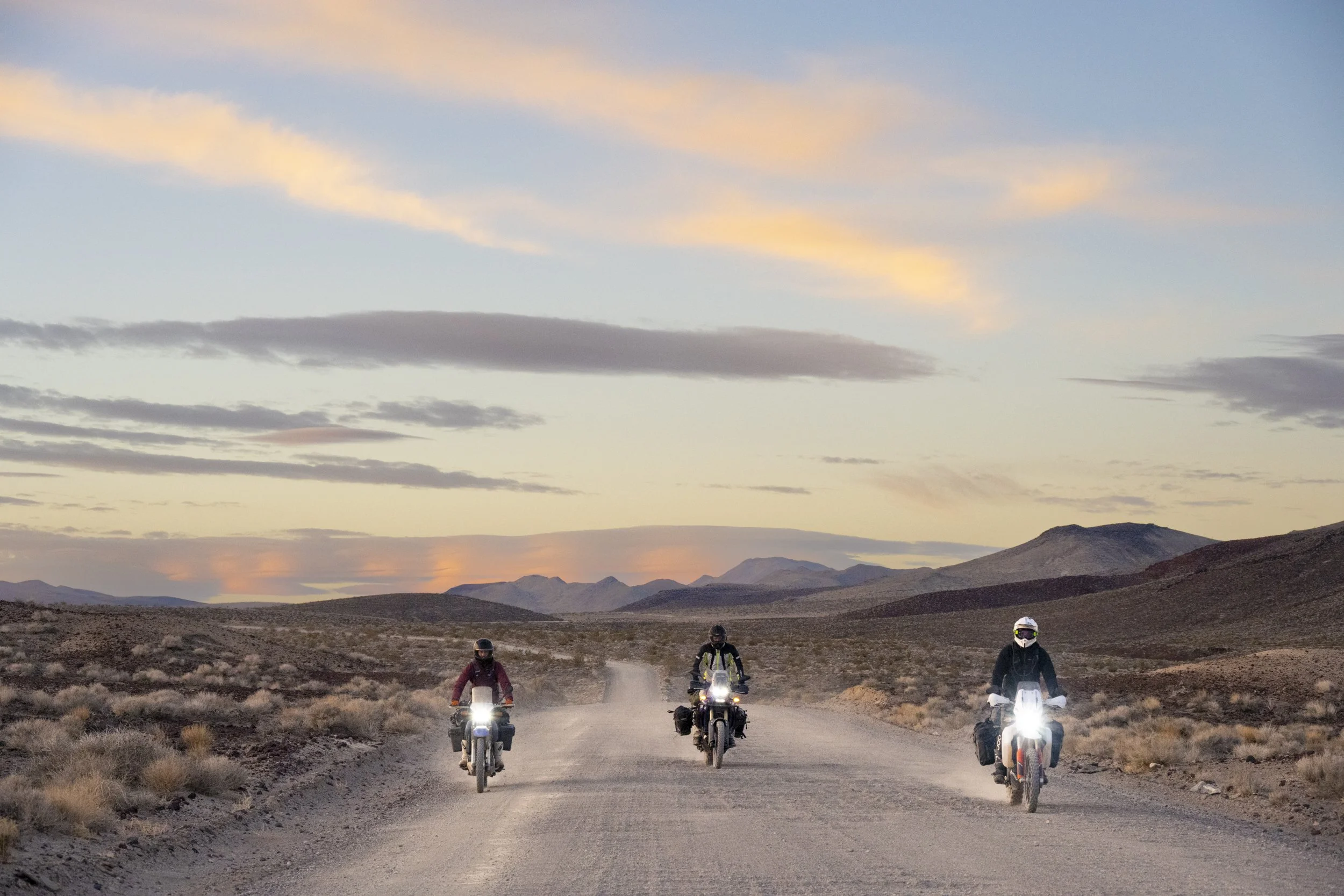
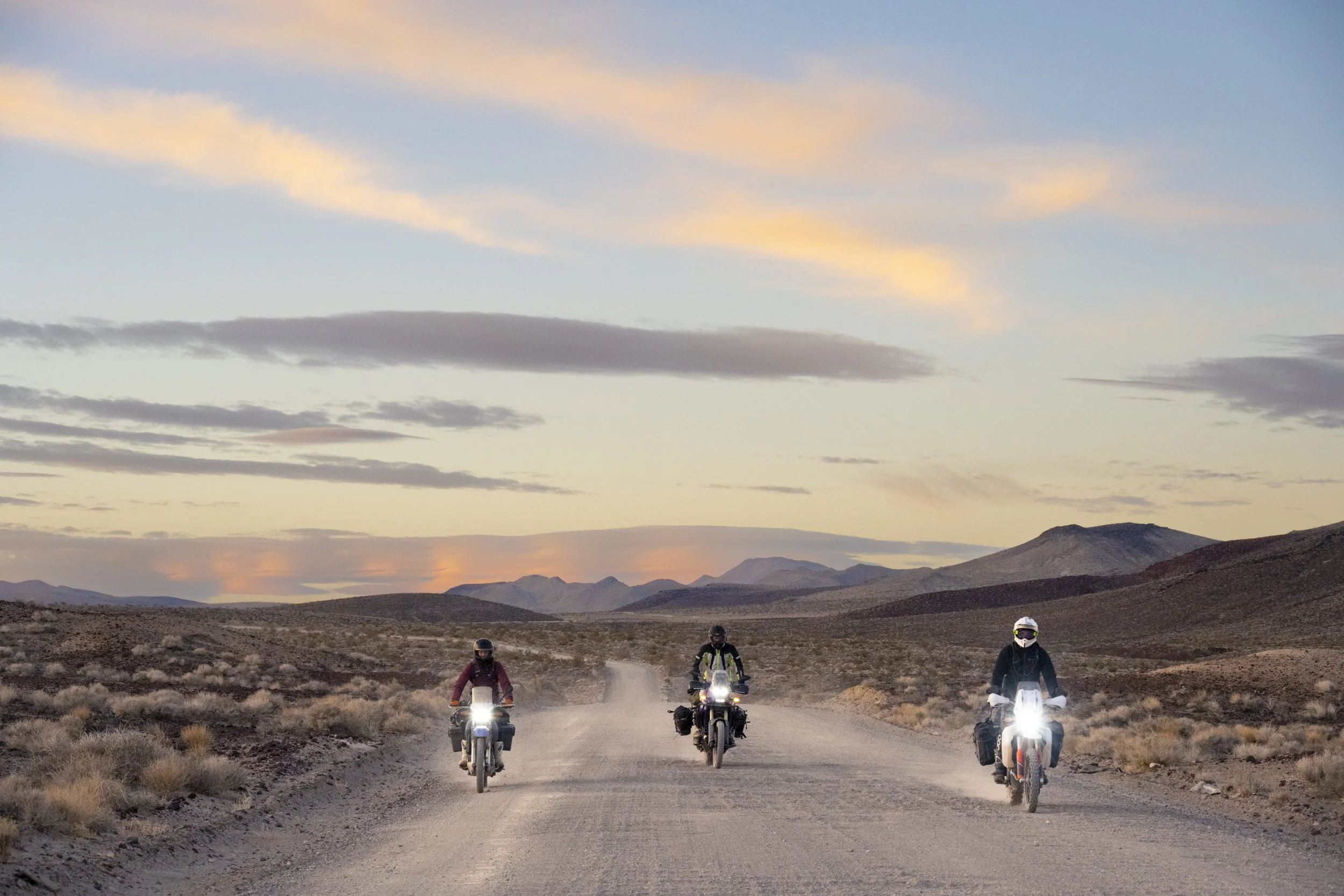
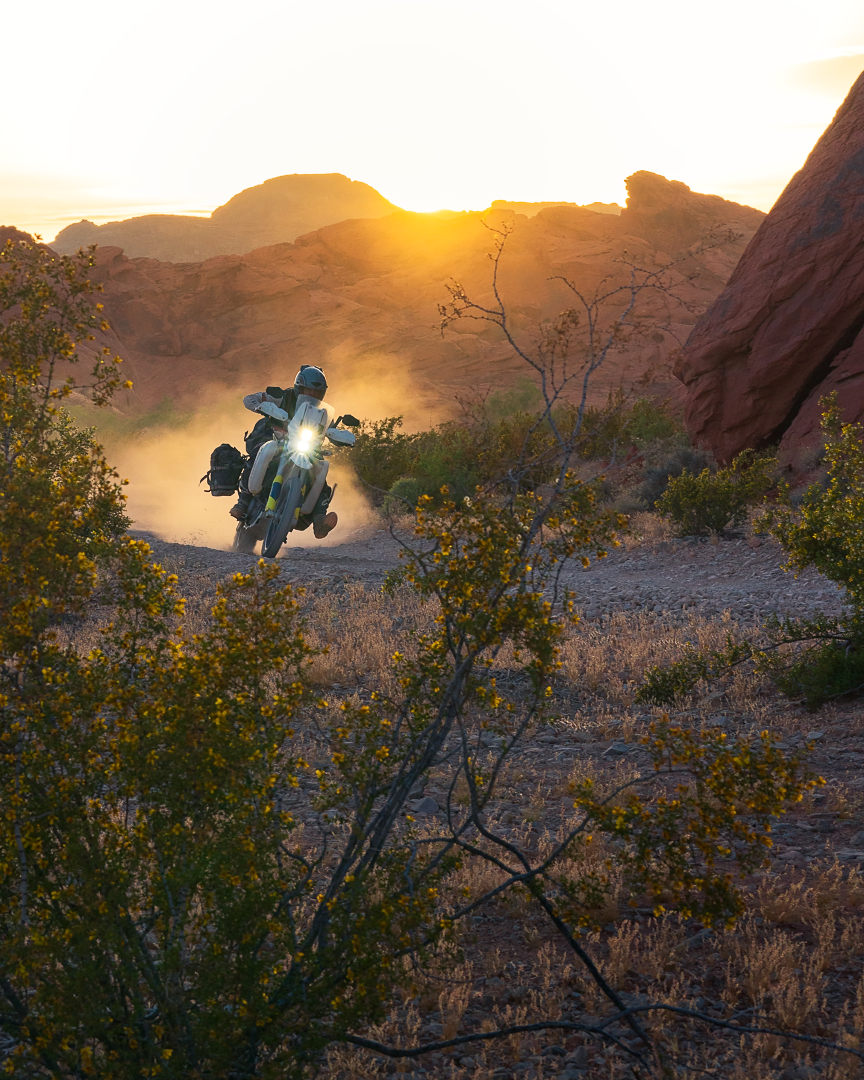
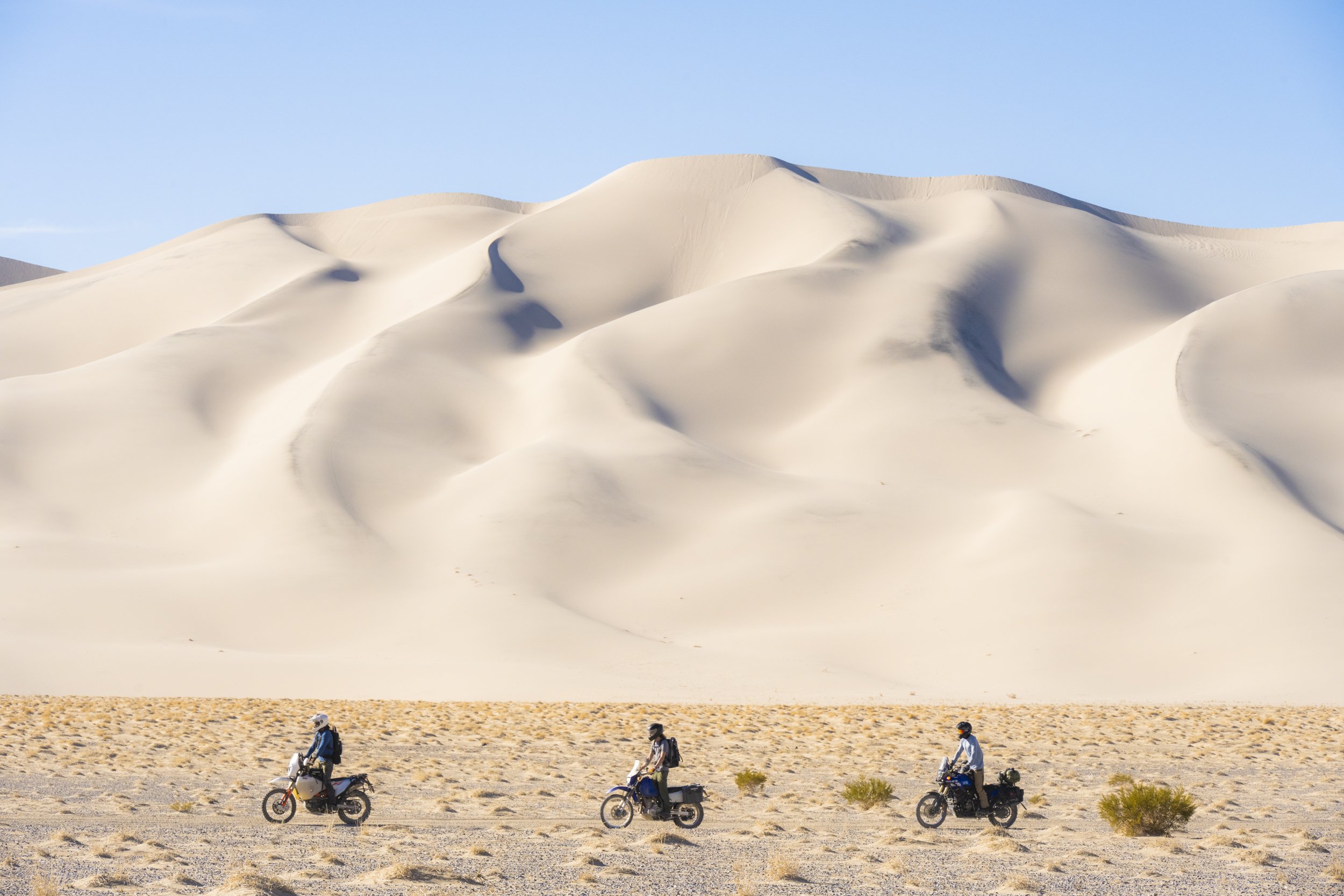
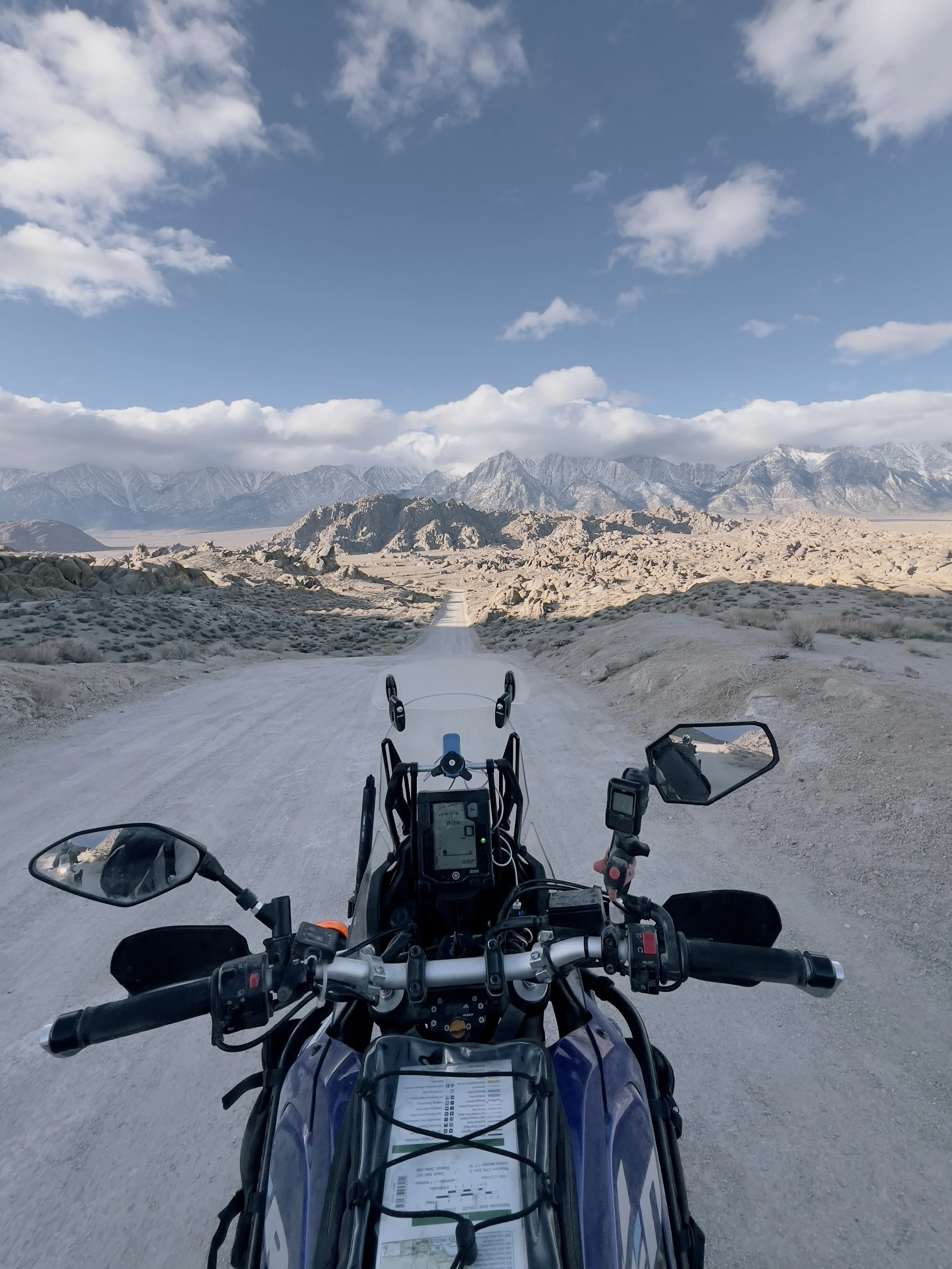
We'll travel through Death Valley on a mix of remote dirt roads and scenic pavement connectors. The focus is not covering miles quickly, but exploring the landscape at a pace that allows us to stop often and take it in.
Create
Throughout the trip we'll share practical guidance on photography, video, and visual storytelling. Instruction happens naturally in the field during stops, scenic viewpoints, and moments when the light or landscape invites us to slow down.
Camp
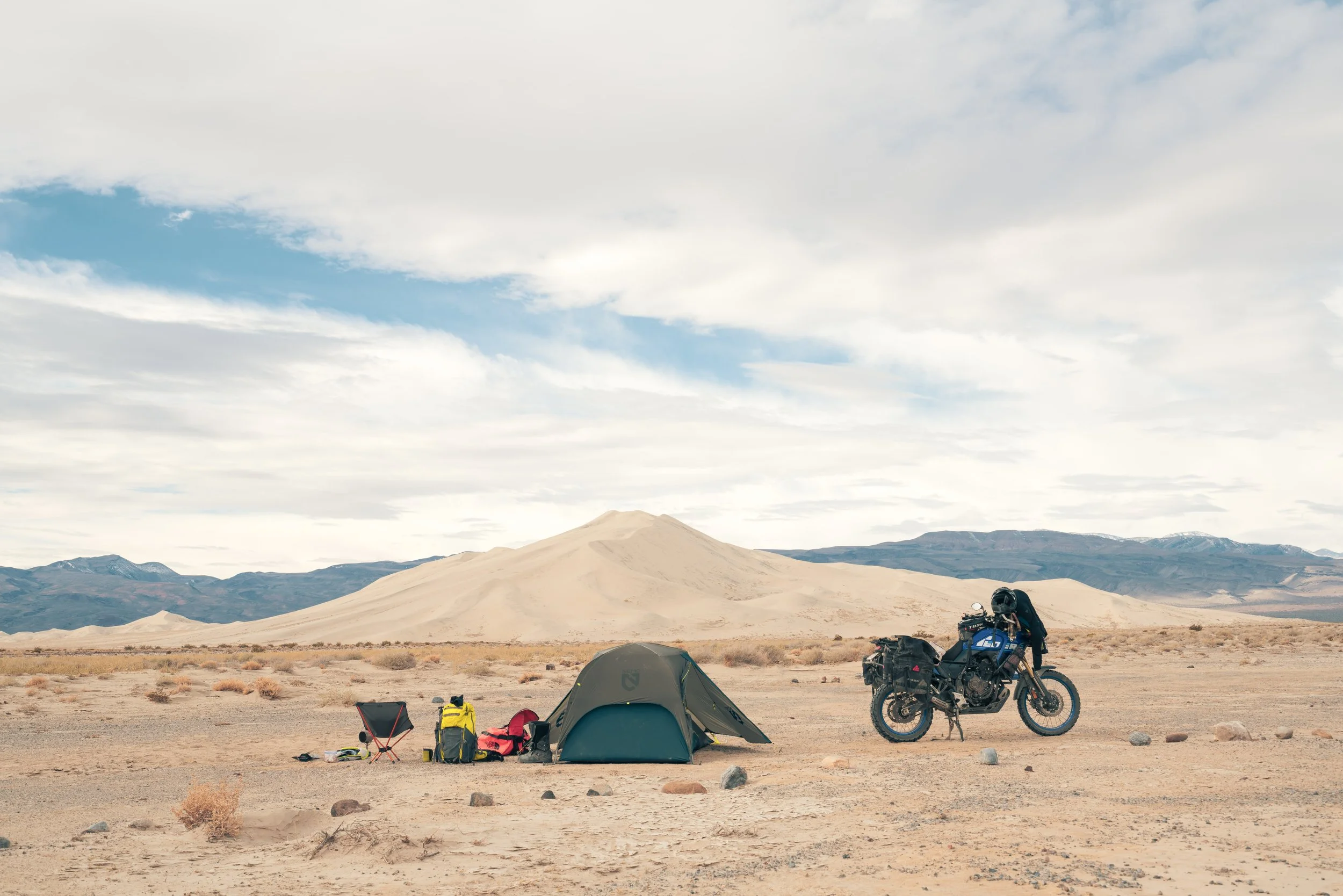
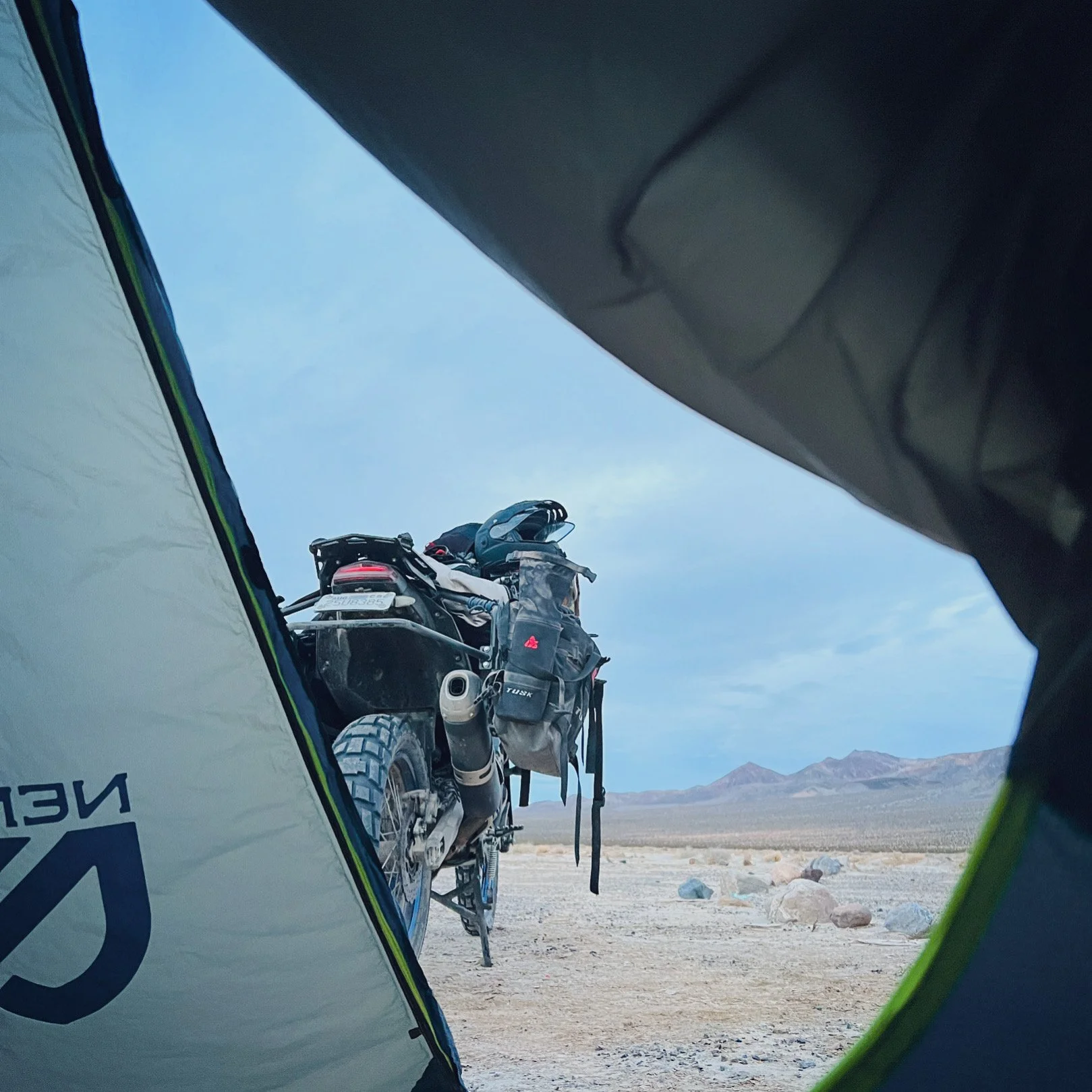
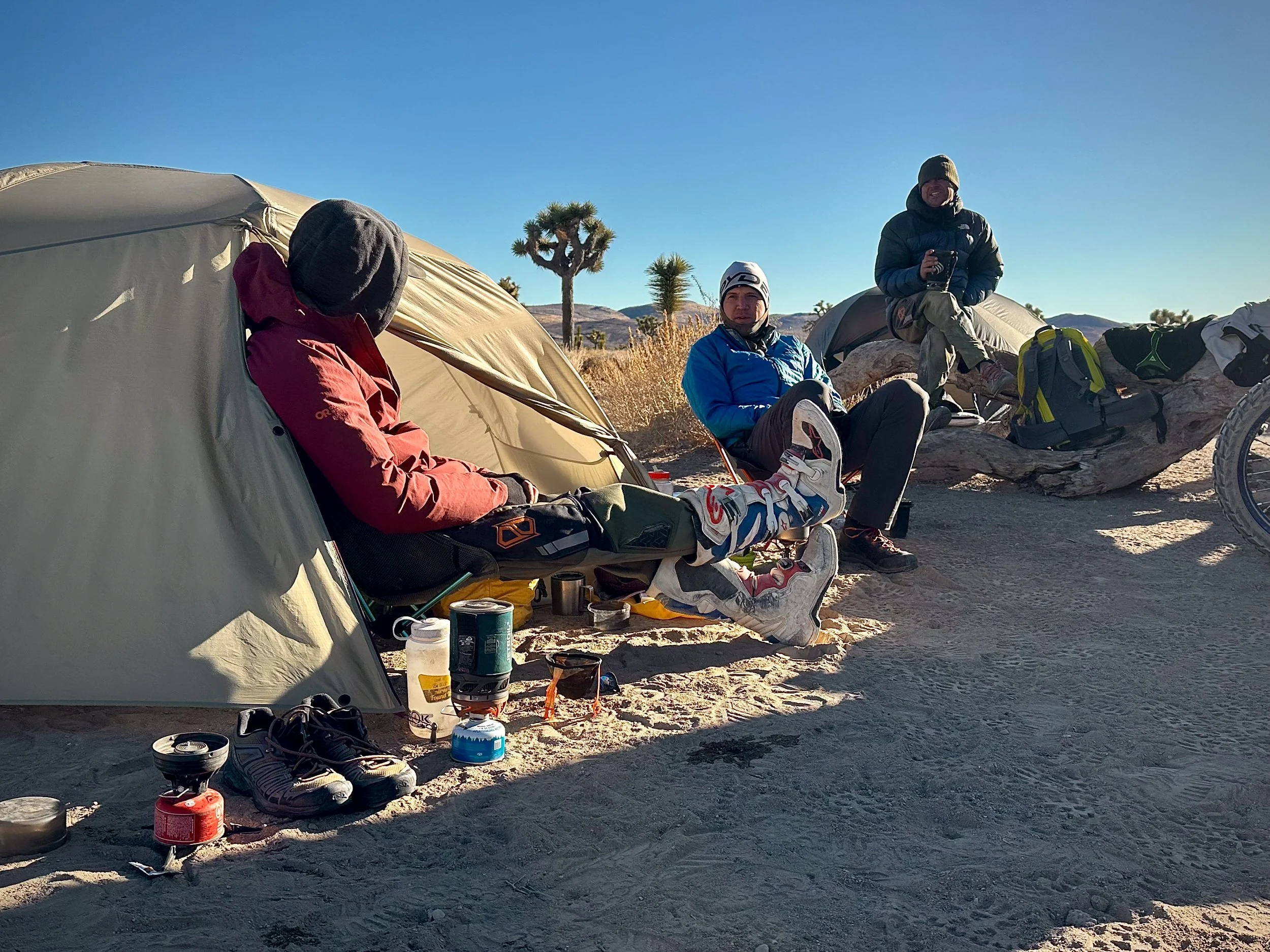
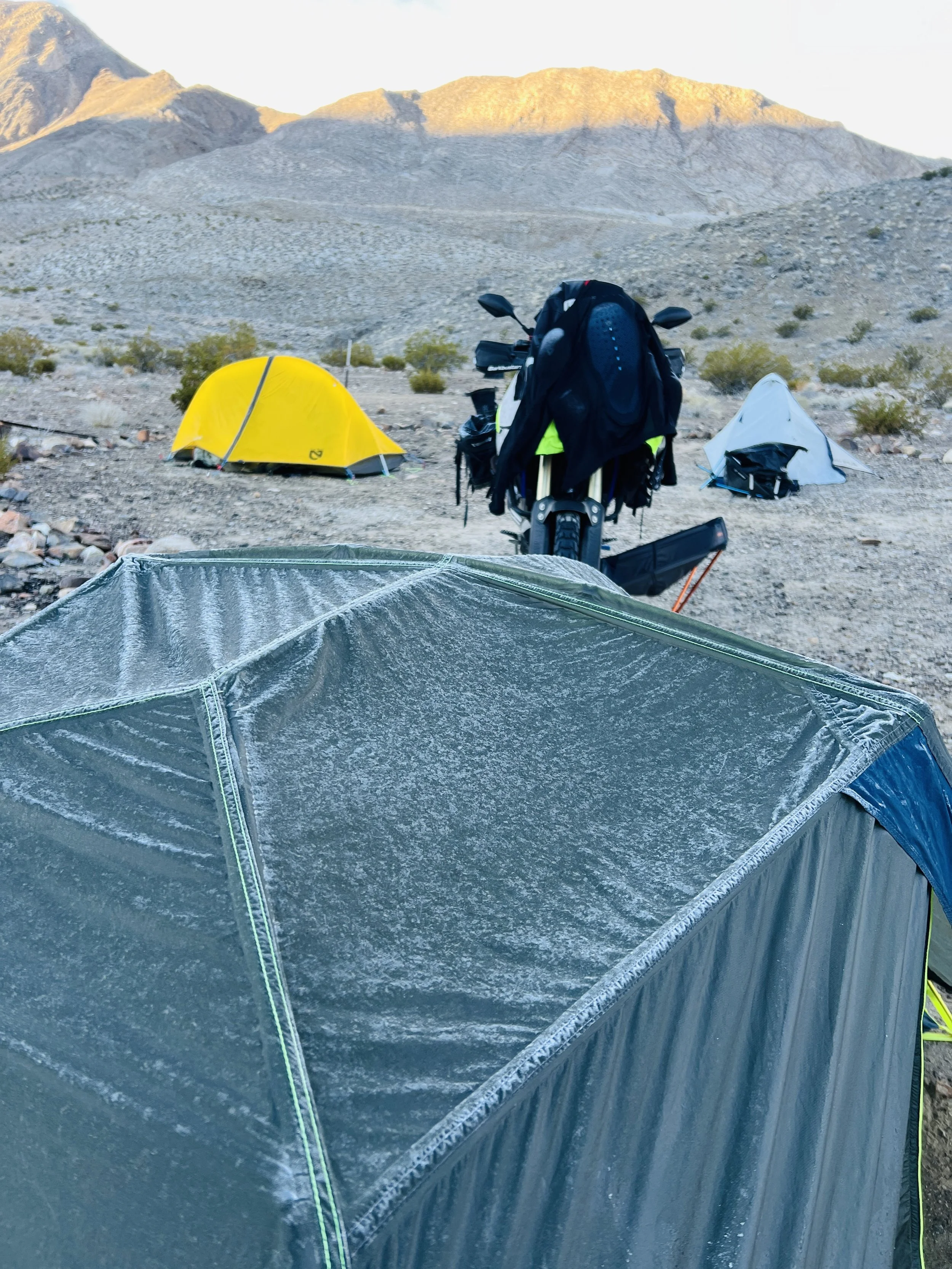
Evenings are spent camping under the desert sky, sharing stories from the day and preparing for the next stretch of road.
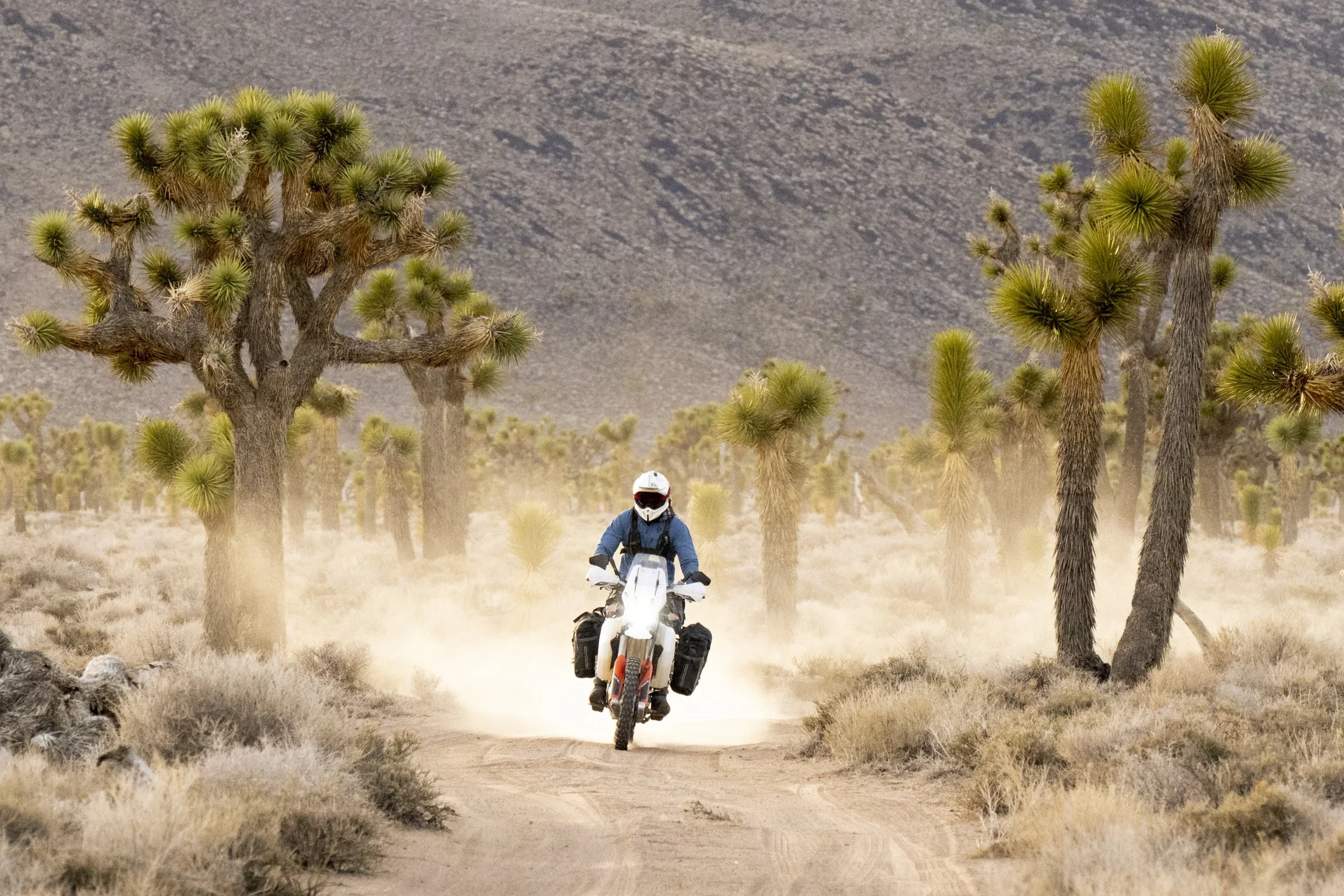

This workshop is led by two photographers who know Death Valley well and share a long history of exploring the desert together on motorcycles and leading photography workshops.
Andrew and Seth have been riding together for years, traveling through remote landscapes throughout the West. Both are experienced adventure riders who understand the realities of traveling and working in rugged terrain. Their shared experience riding and exploring together helps ensure the trip runs smoothly while keeping the focus on photography, exploration, and the experience of being in the desert.
With a small group of just six participants, you’ll receive plenty of individual attention in the field while benefiting from two instructors guiding the experience.
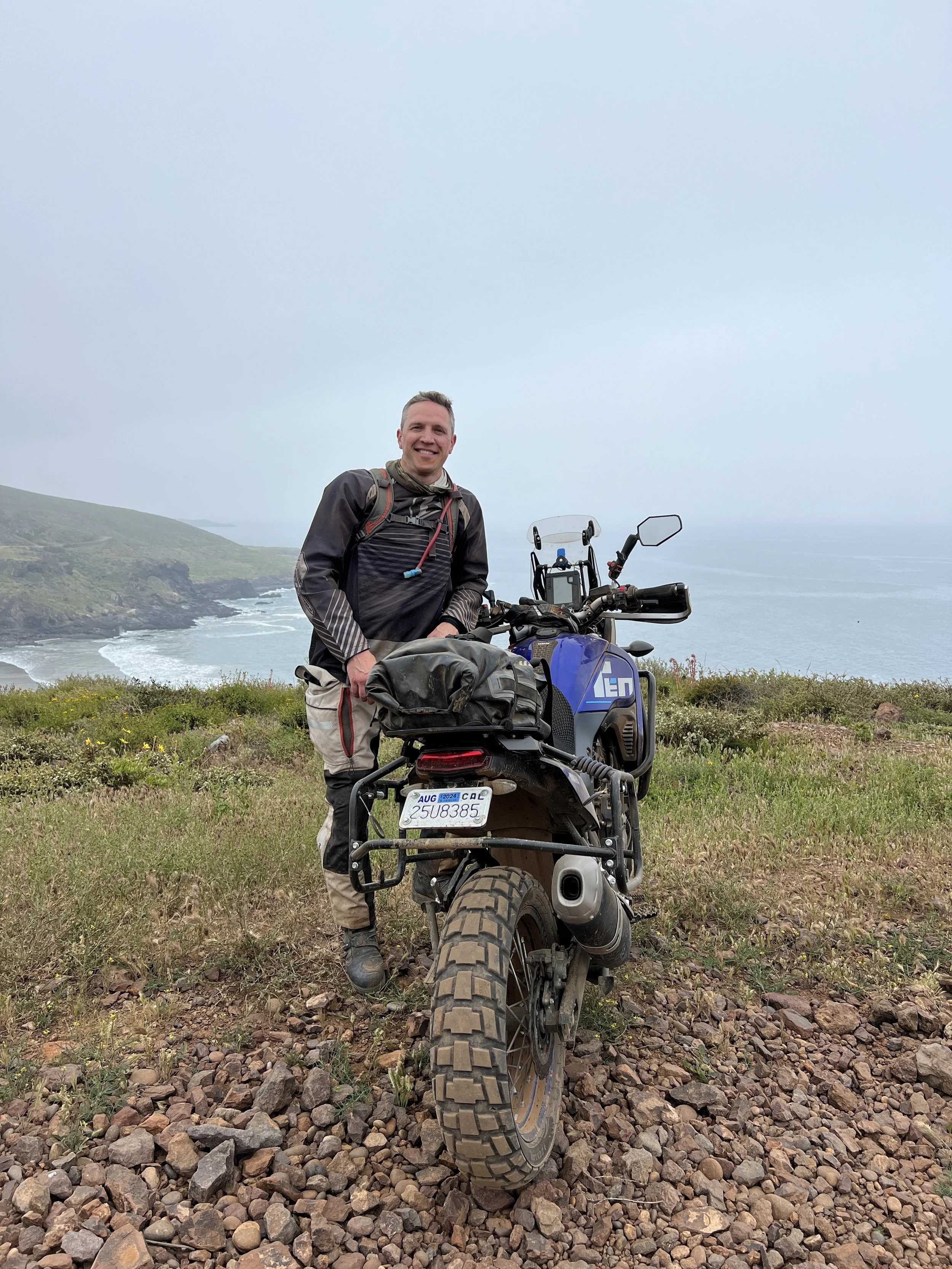
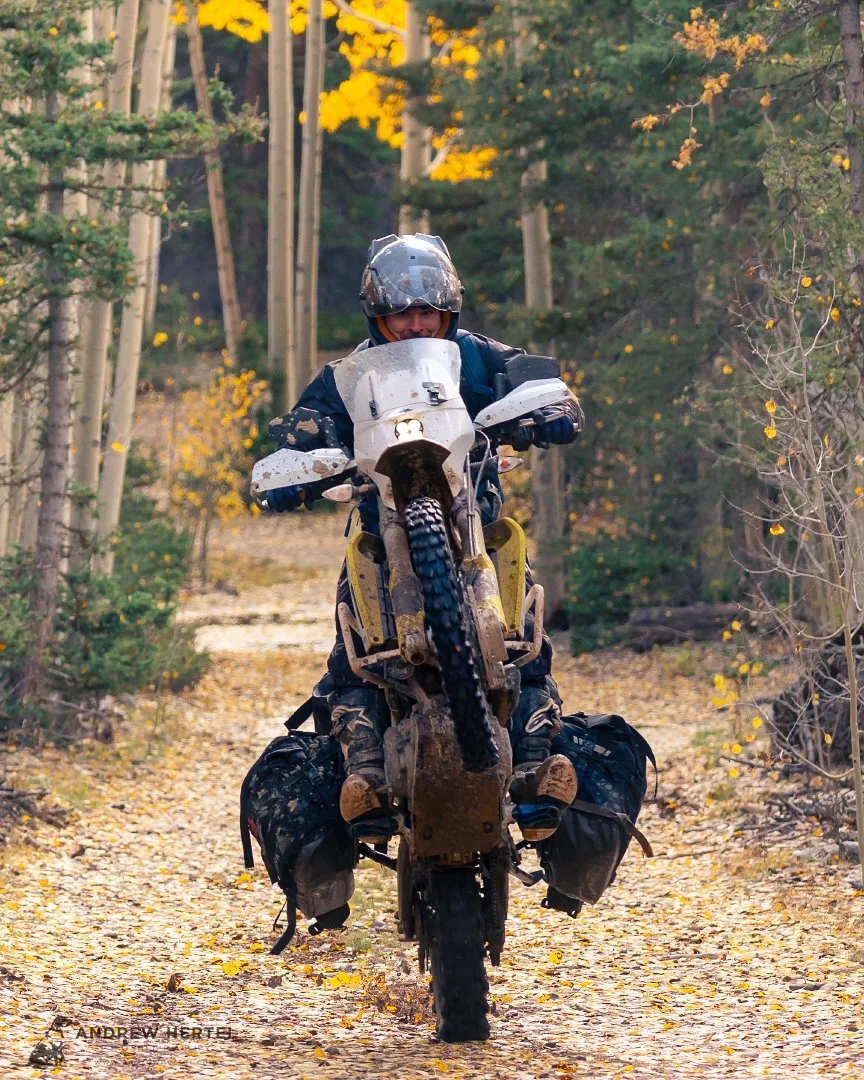
Your Guides
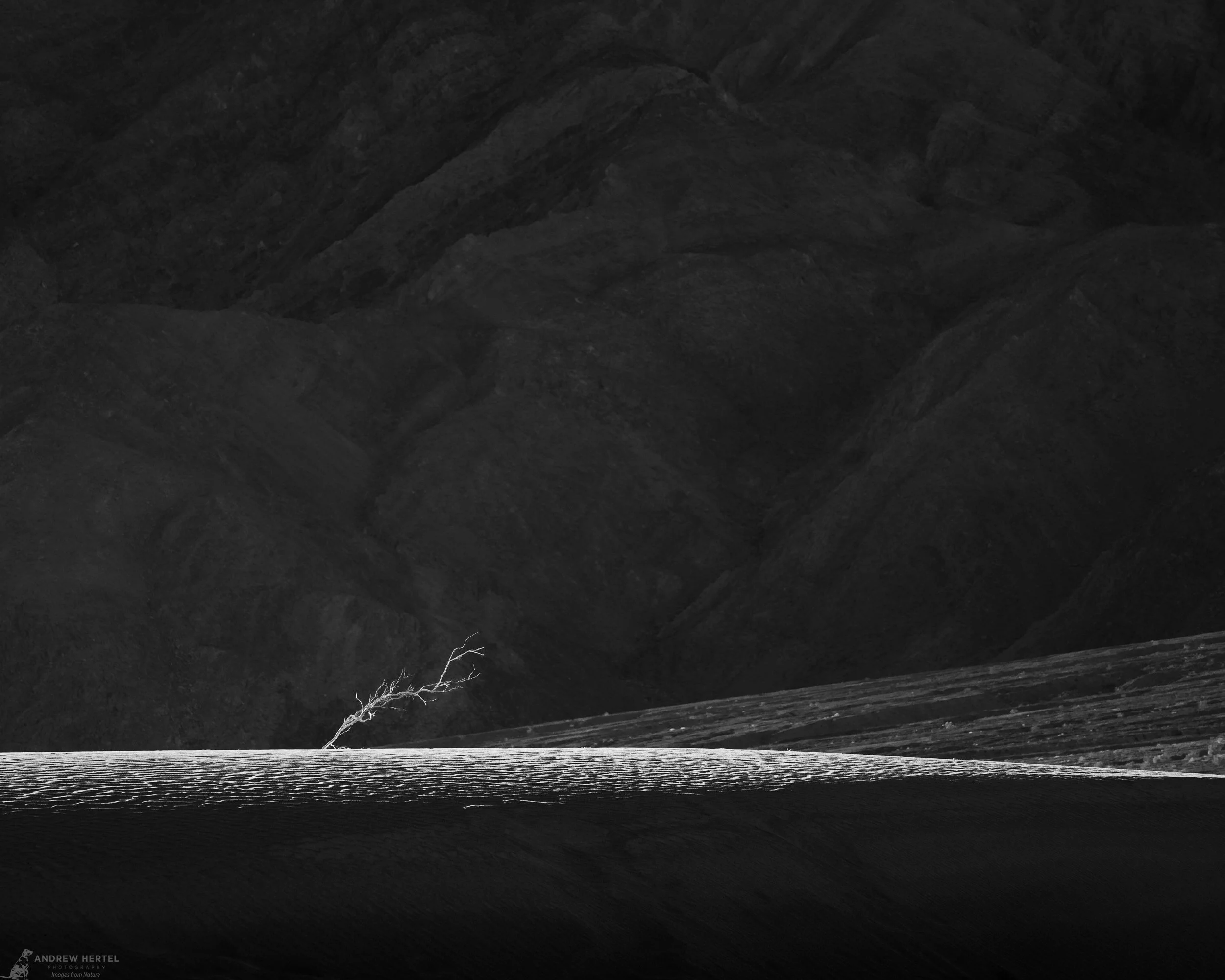
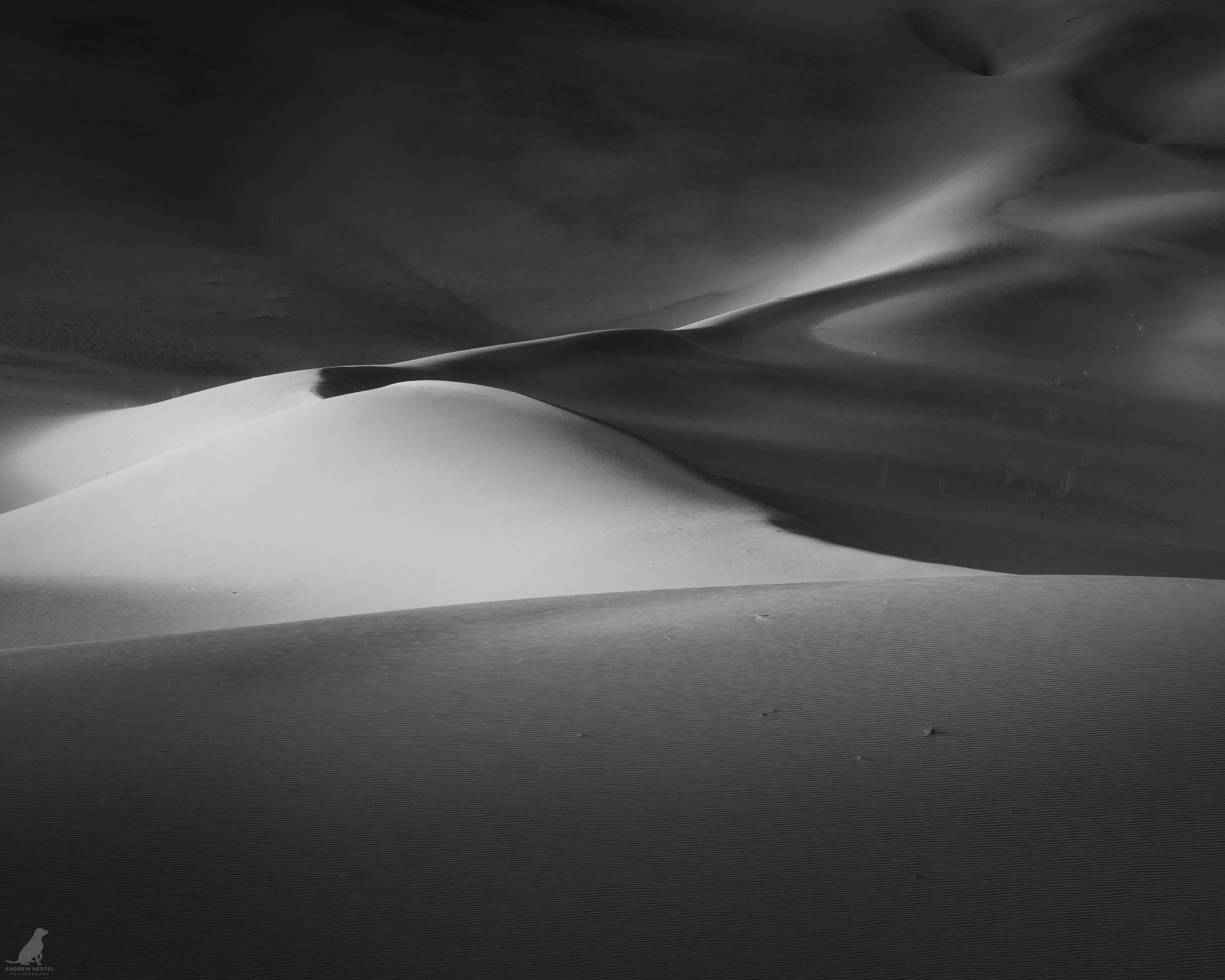
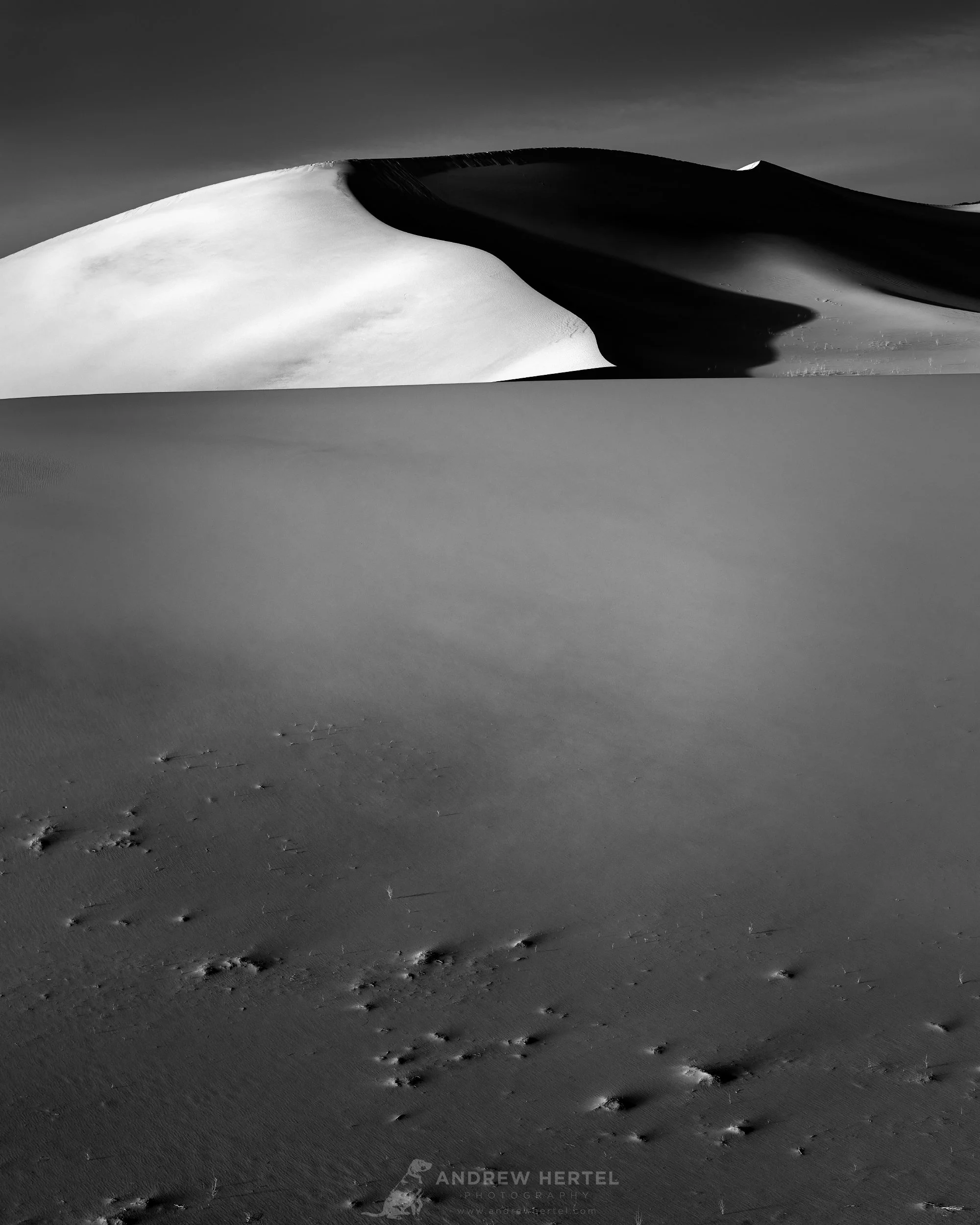
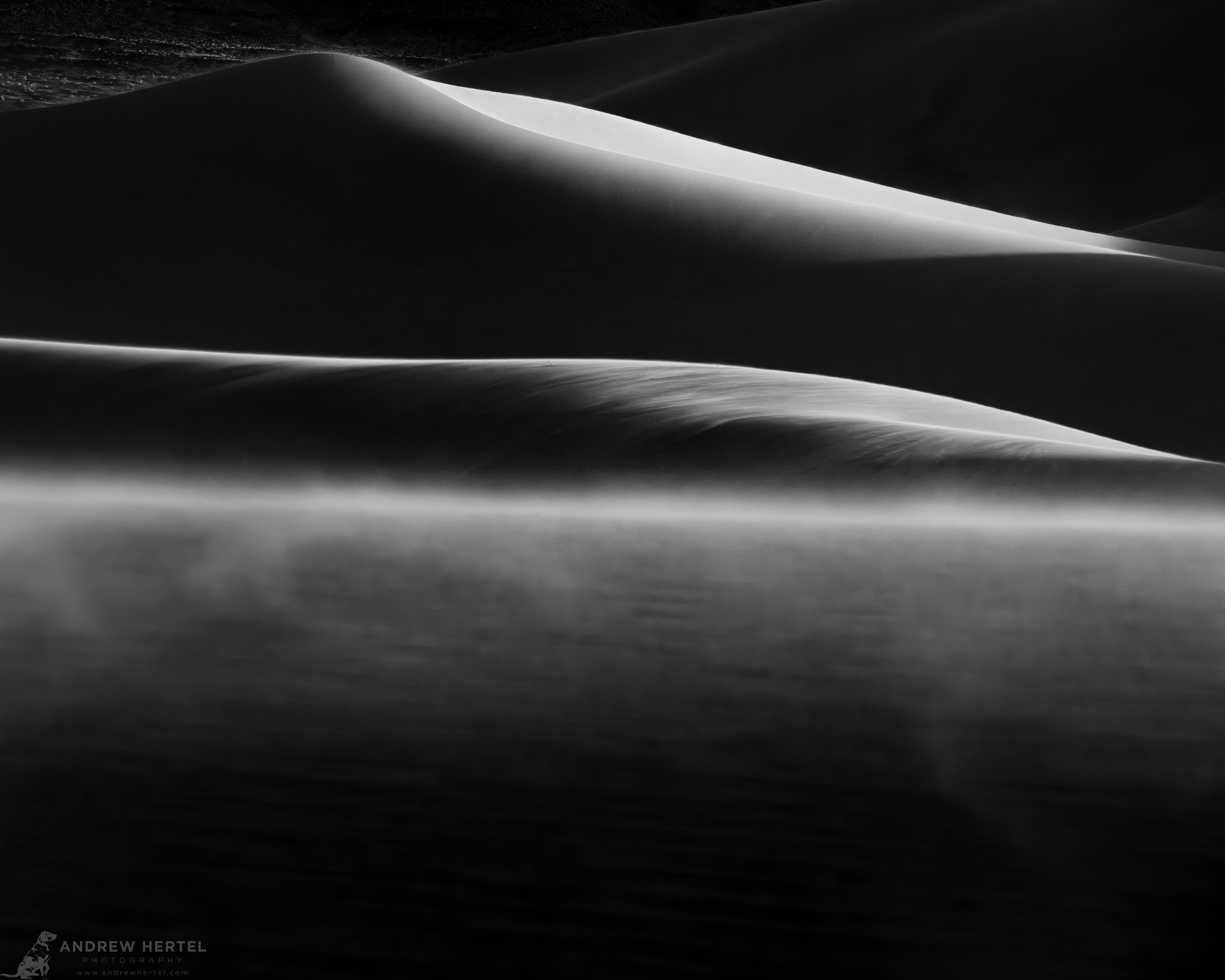
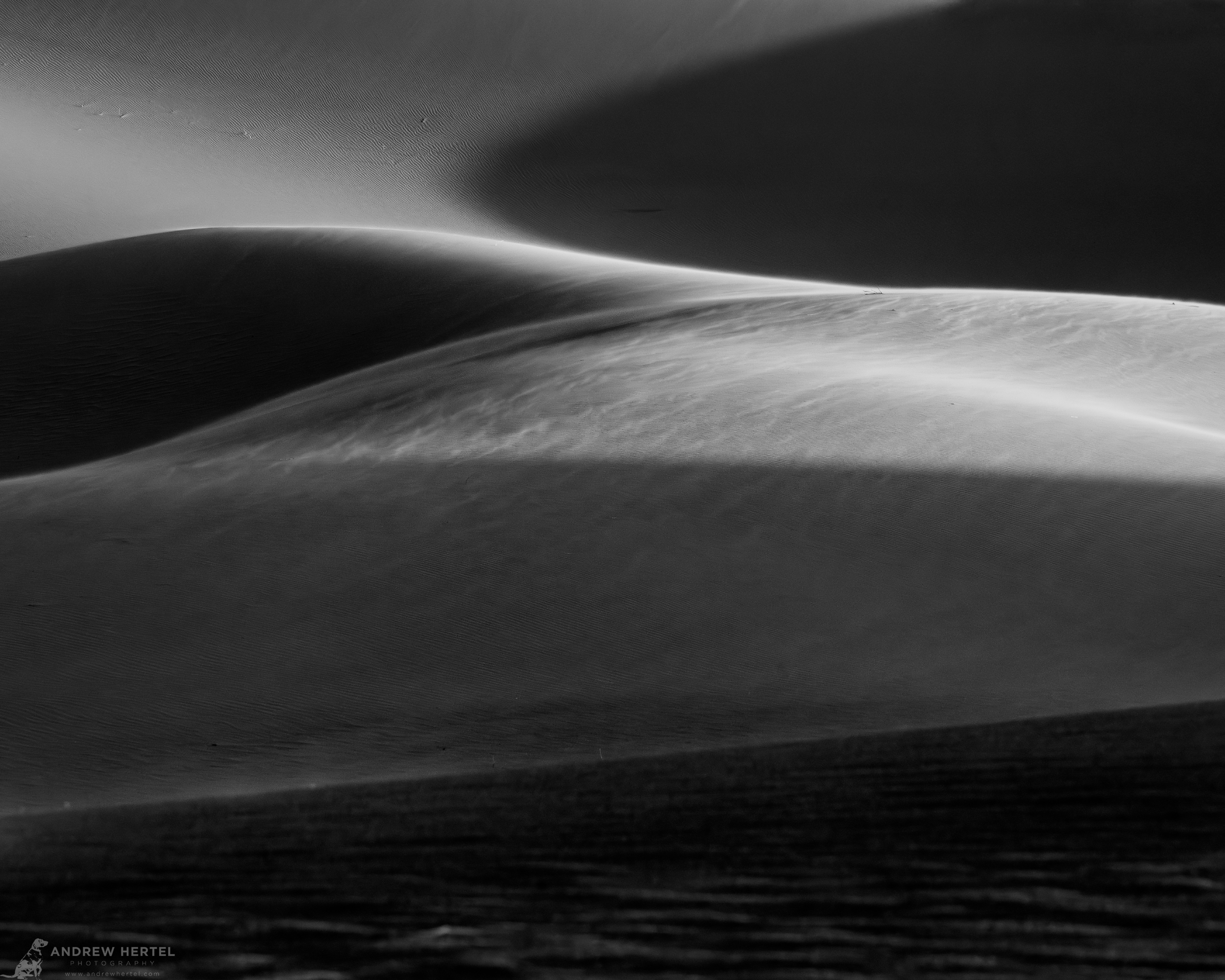
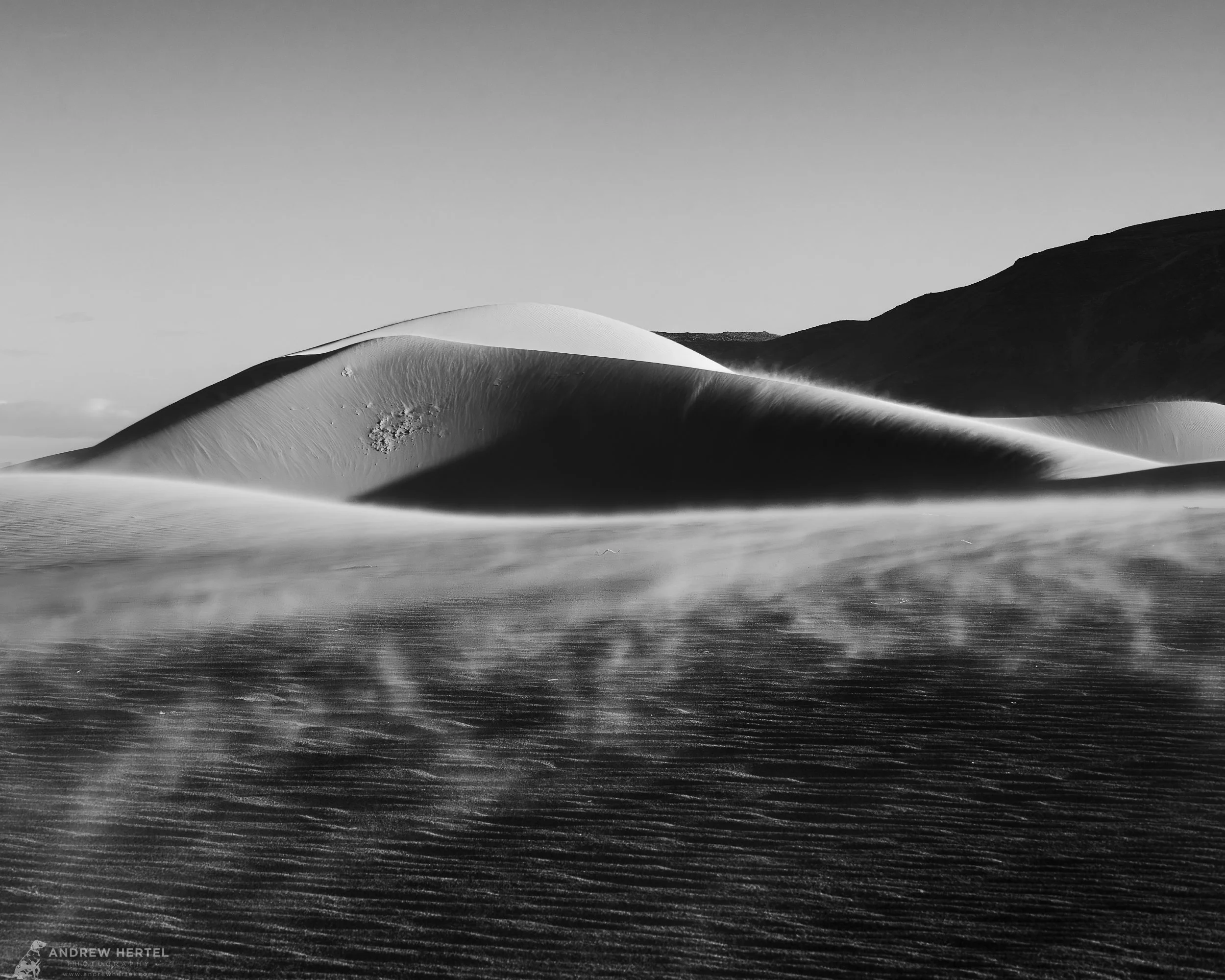
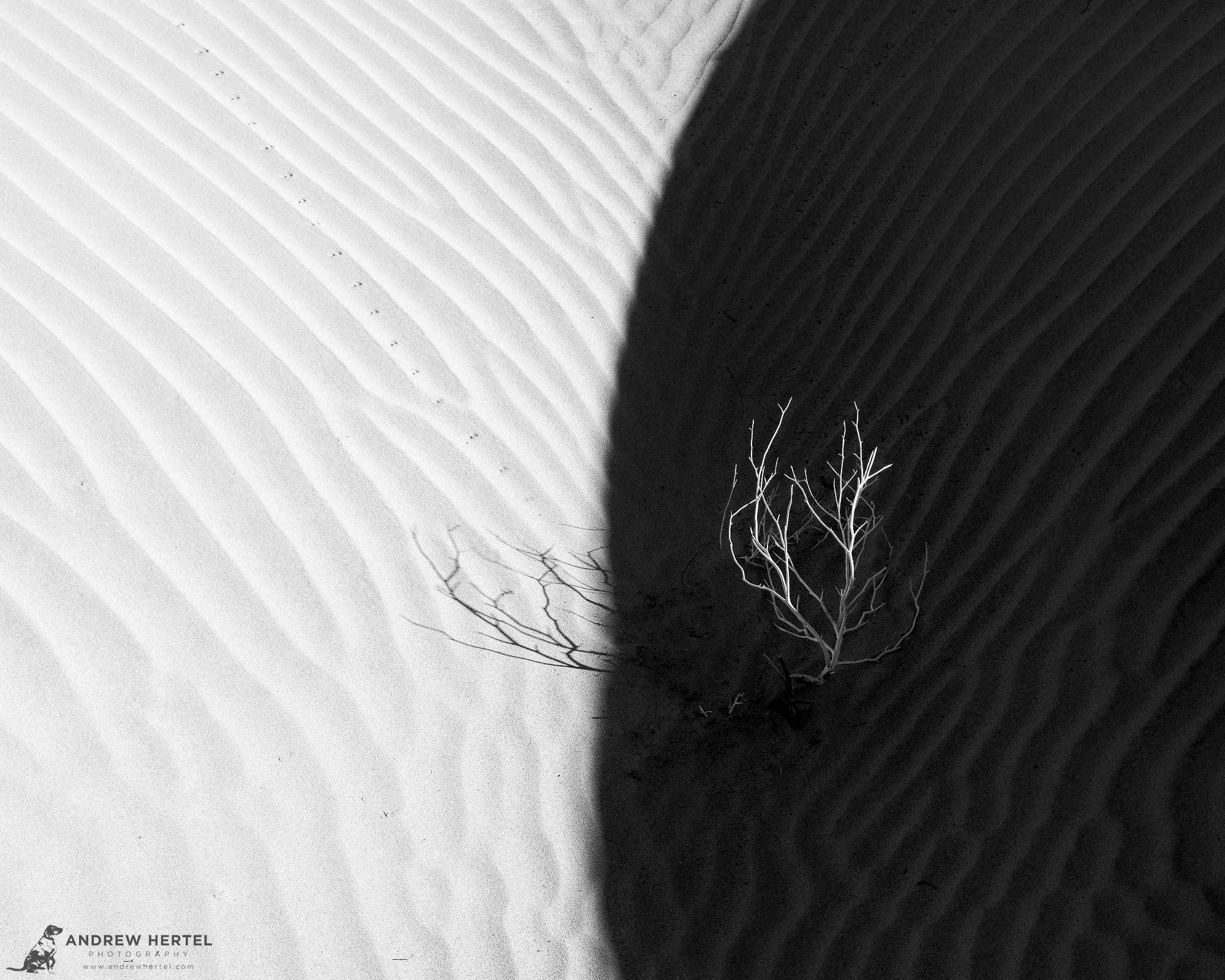
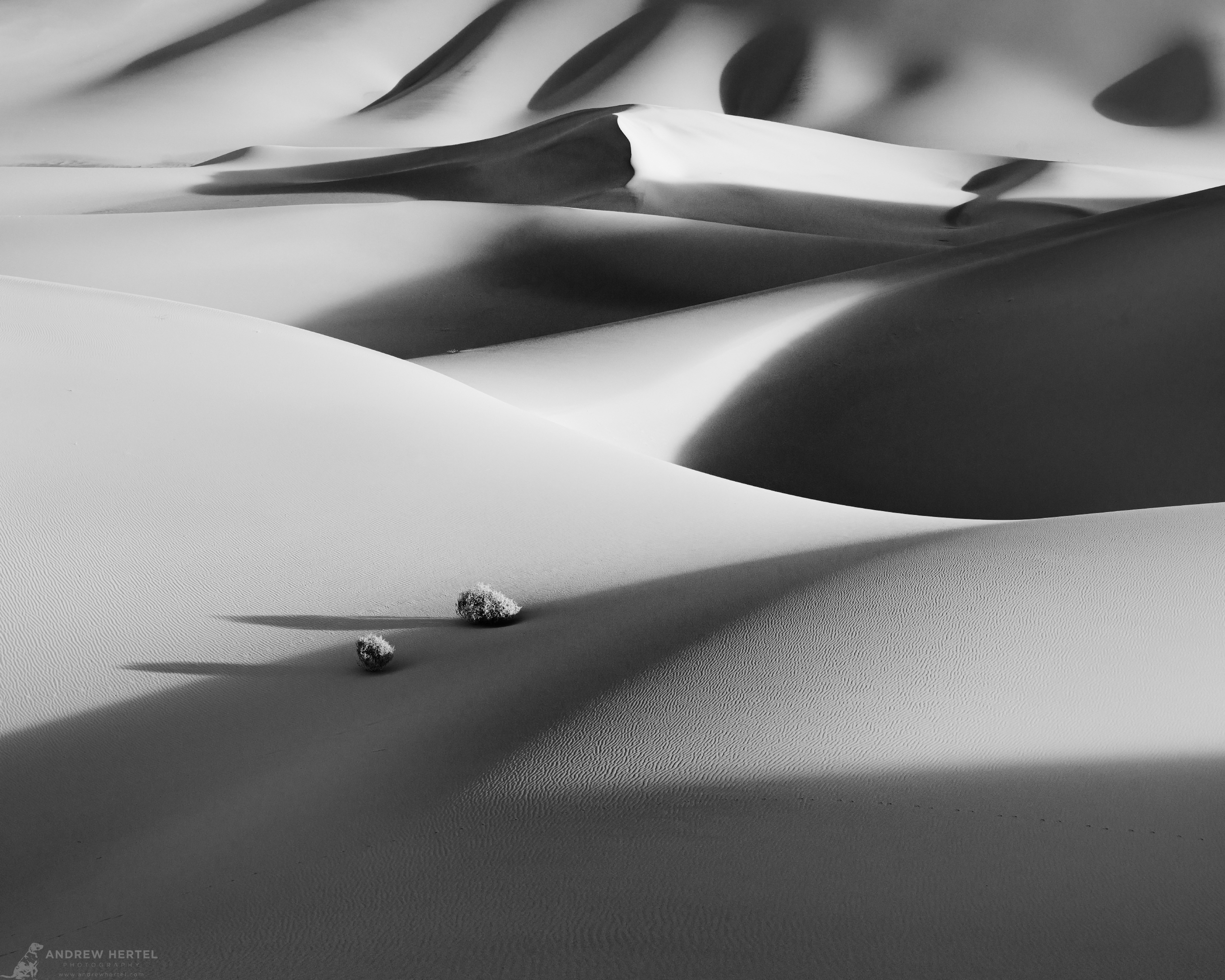
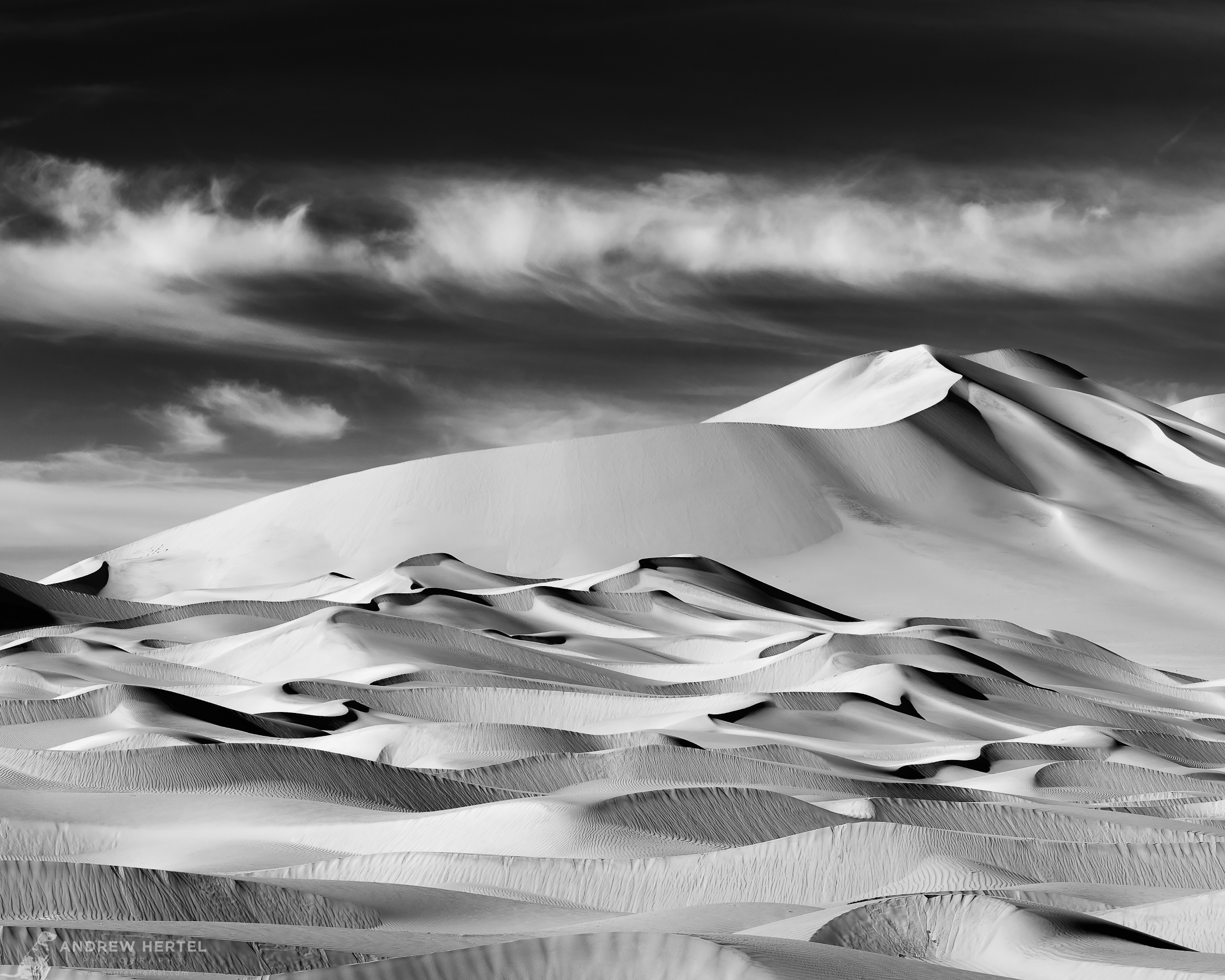
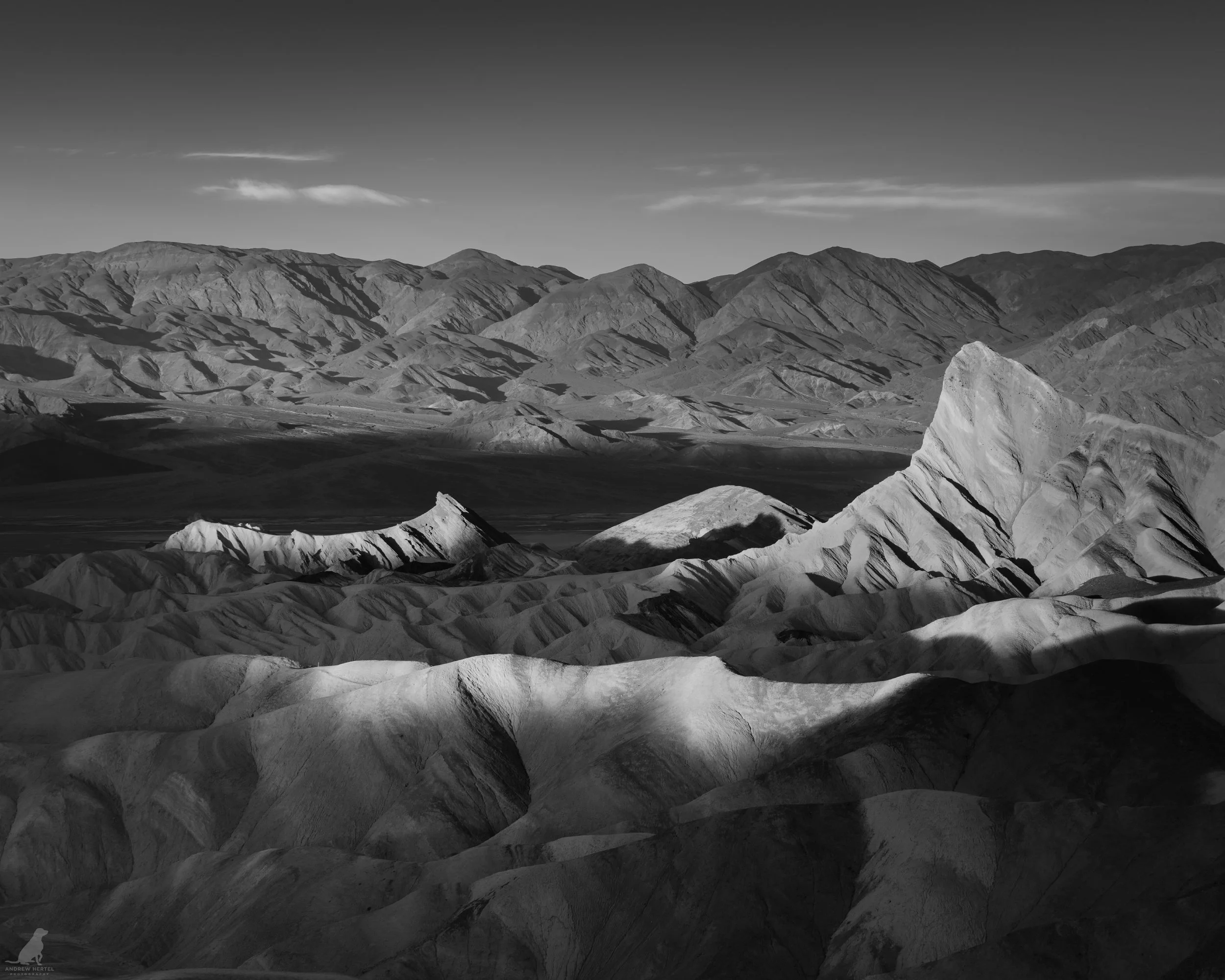
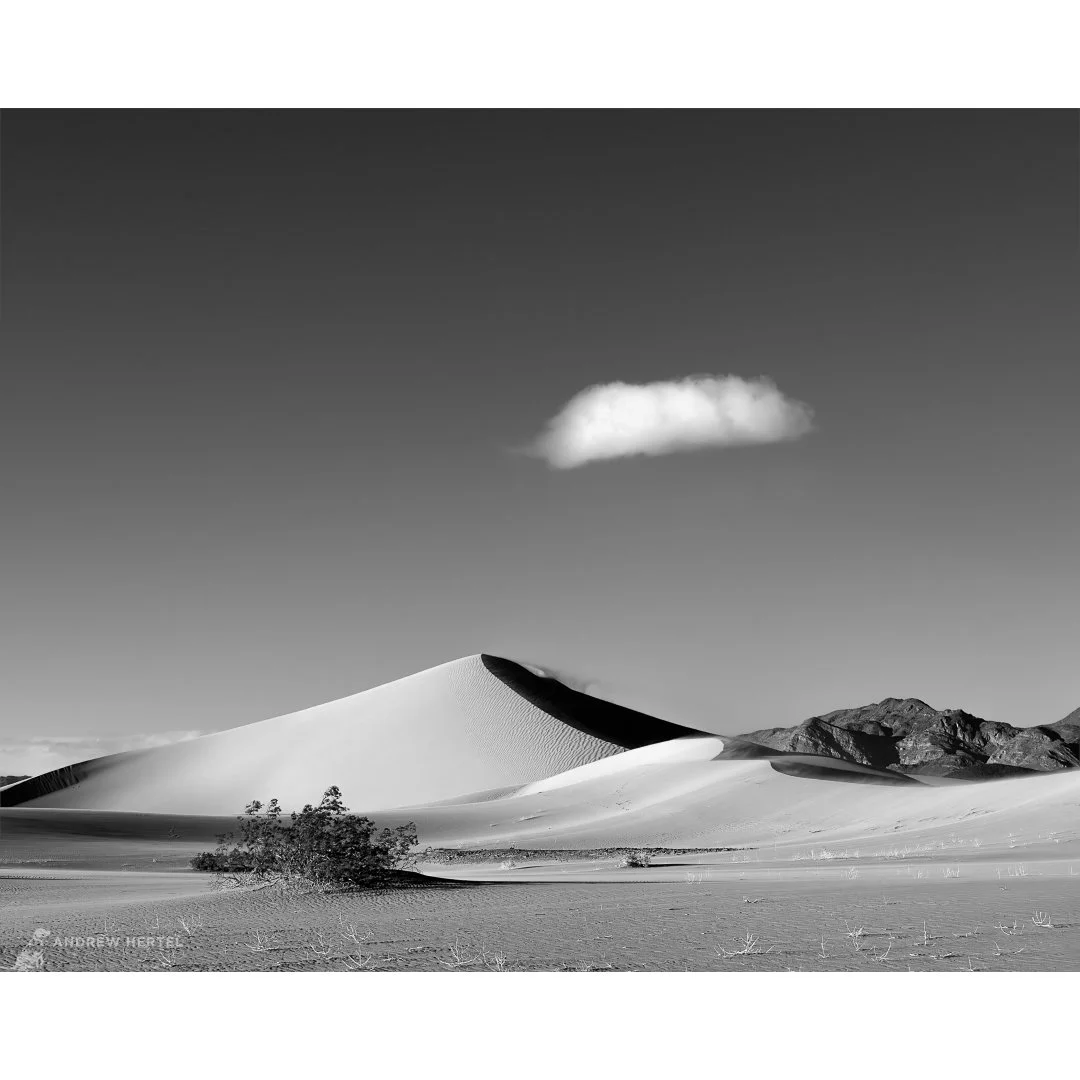
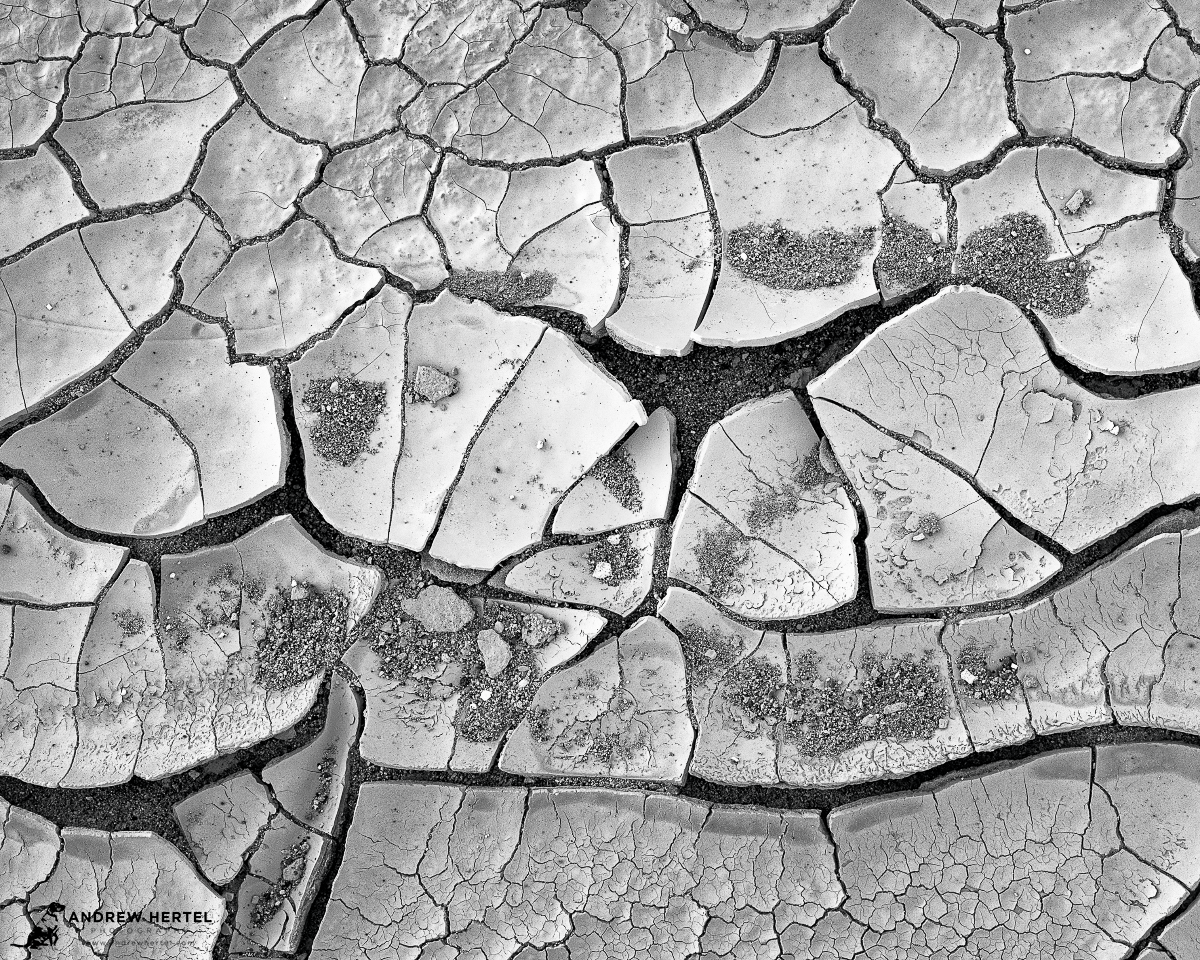
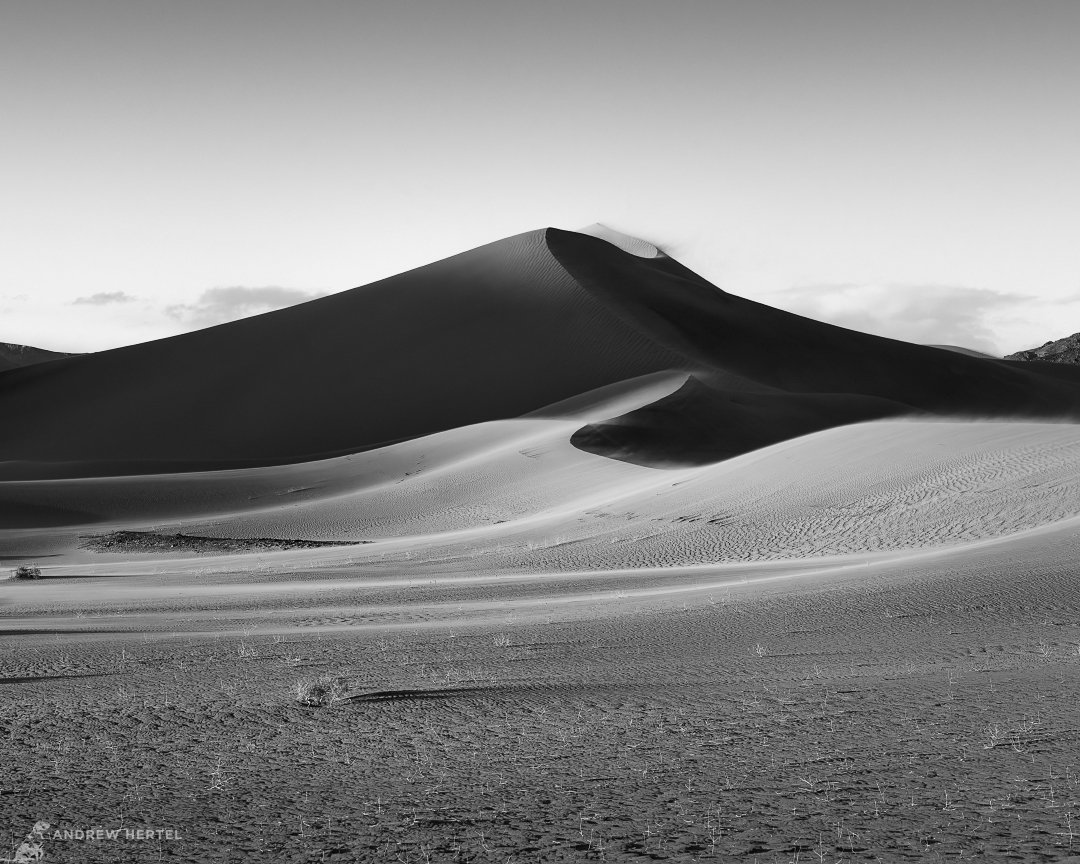
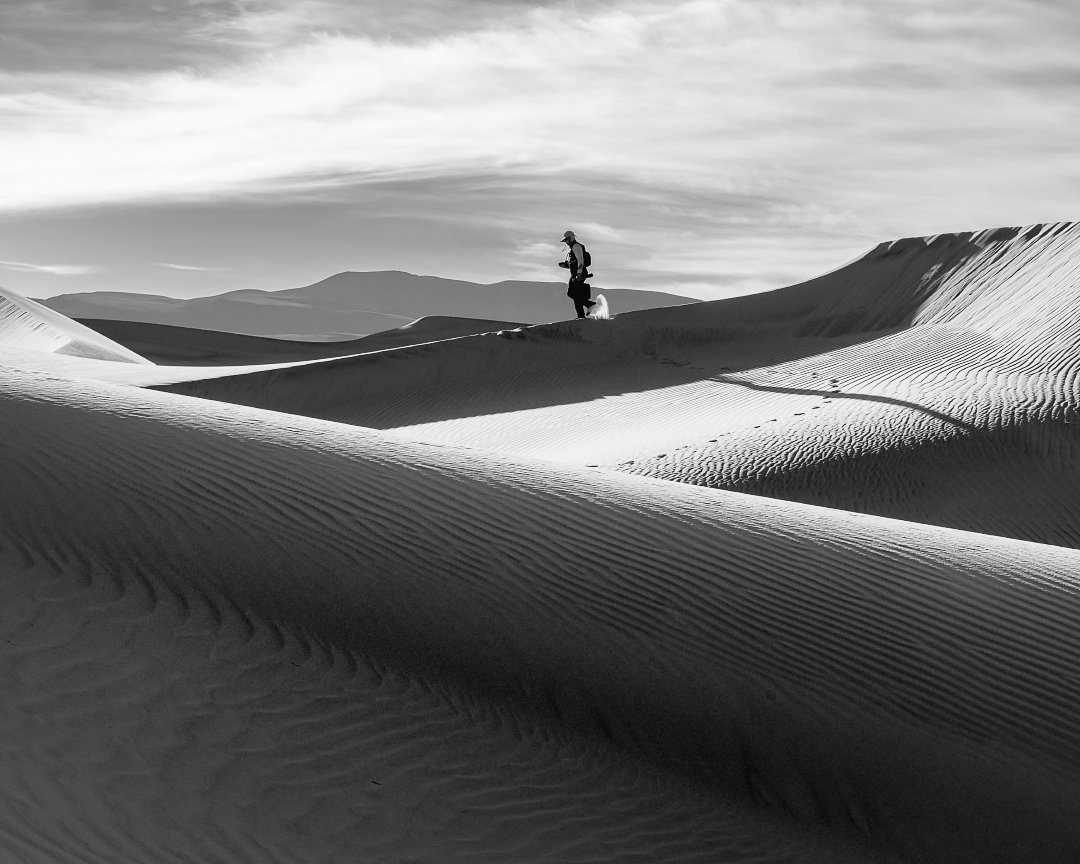
Andrew Hertel is a fine art nature photographer based in Southern California. His black and white work focuses on quiet moments in the landscape, where light, texture, and form reveal the deeper character of a place.
Andrew’s approach to photography is rooted in experience first. Time spent exploring the landscape, often by motorcycle, leads to a deeper connection with the places he photographs. His workshops reflect that philosophy, encouraging participants to slow down, observe carefully, and develop their own way of seeing the landscape.
Seth Hamel is a professional photographer and experienced guide based in Southern Utah. With years of experience guiding photographers in places like Zion, Bryce Canyon, and across the surrounding desert landscapes, Seth brings deep knowledge of the terrain and the conditions that shape these environments.
Seth is also an experienced adventure rider who has spent years exploring the desert backroads of the Southwest. His familiarity with remote terrain and backcountry travel helps ensure the workshop runs safely and smoothly while allowing participants to access incredible photographic locations.
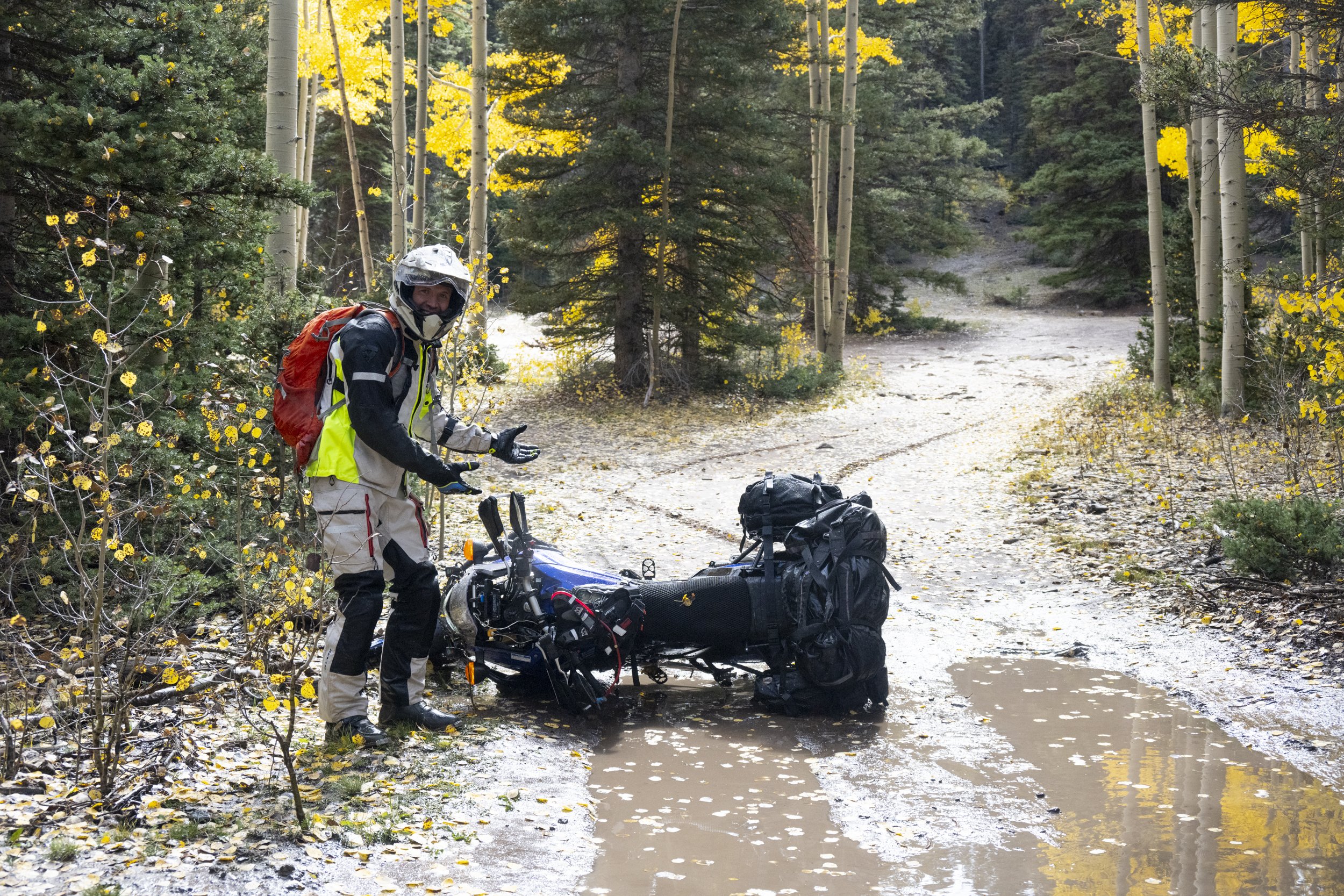
What You’ll Learn
This workshop goes beyond traditional landscape photography. While we will spend time photographing the incredible landscapes of Death Valley, we will also explore how to tell the story of an adventure through photography and video.
Traveling through the desert by motorcycle creates opportunities to document the experience itself, not just the places we visit. Along the way, Andrew and Seth will share techniques for photographing both the landscape and the journey.
Throughout the workshop we will cover topics such as:
recognizing strong compositions in complex desert environments
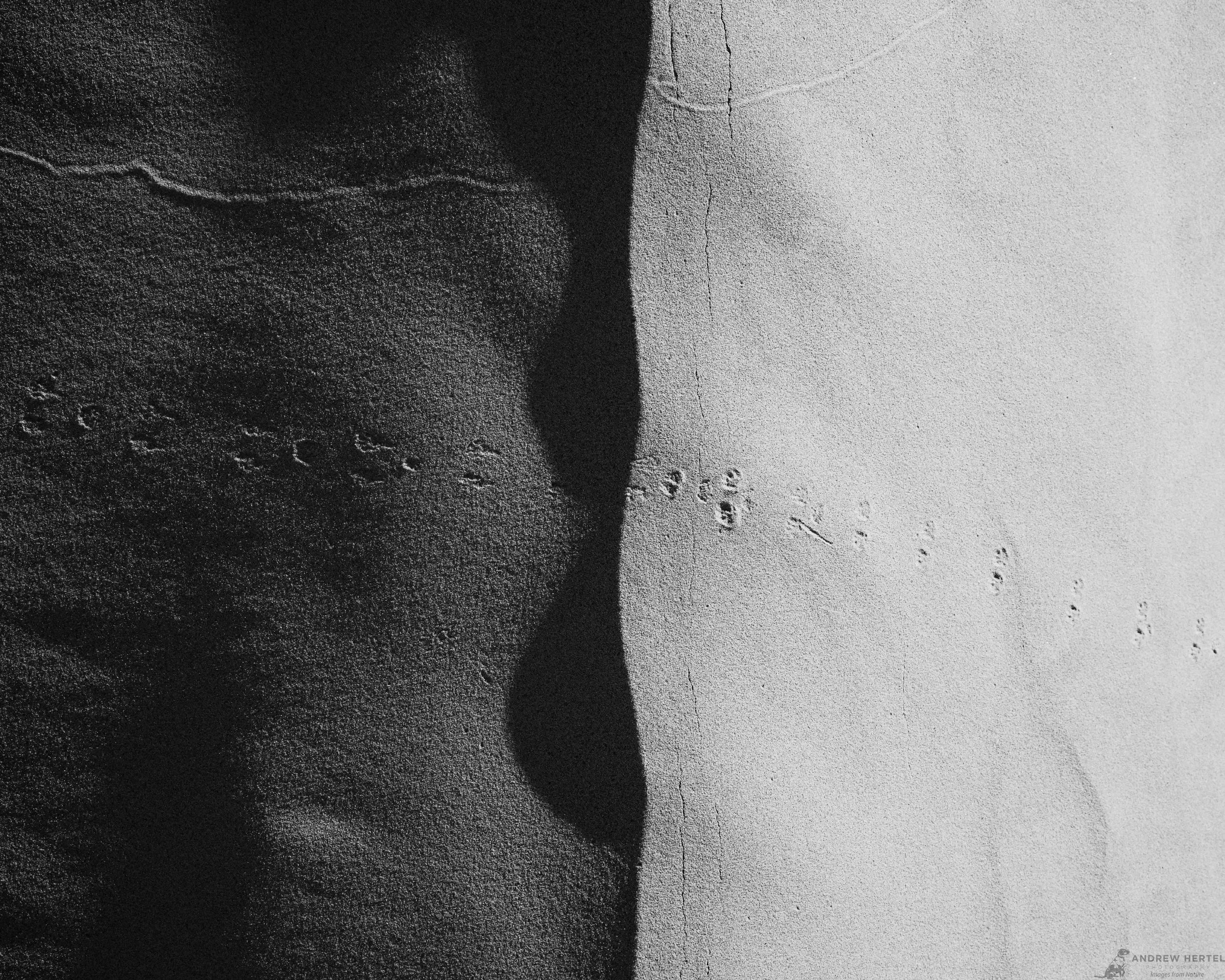
working with light, shadow, and texture in the desert
simplifying scenes into strong black and white images
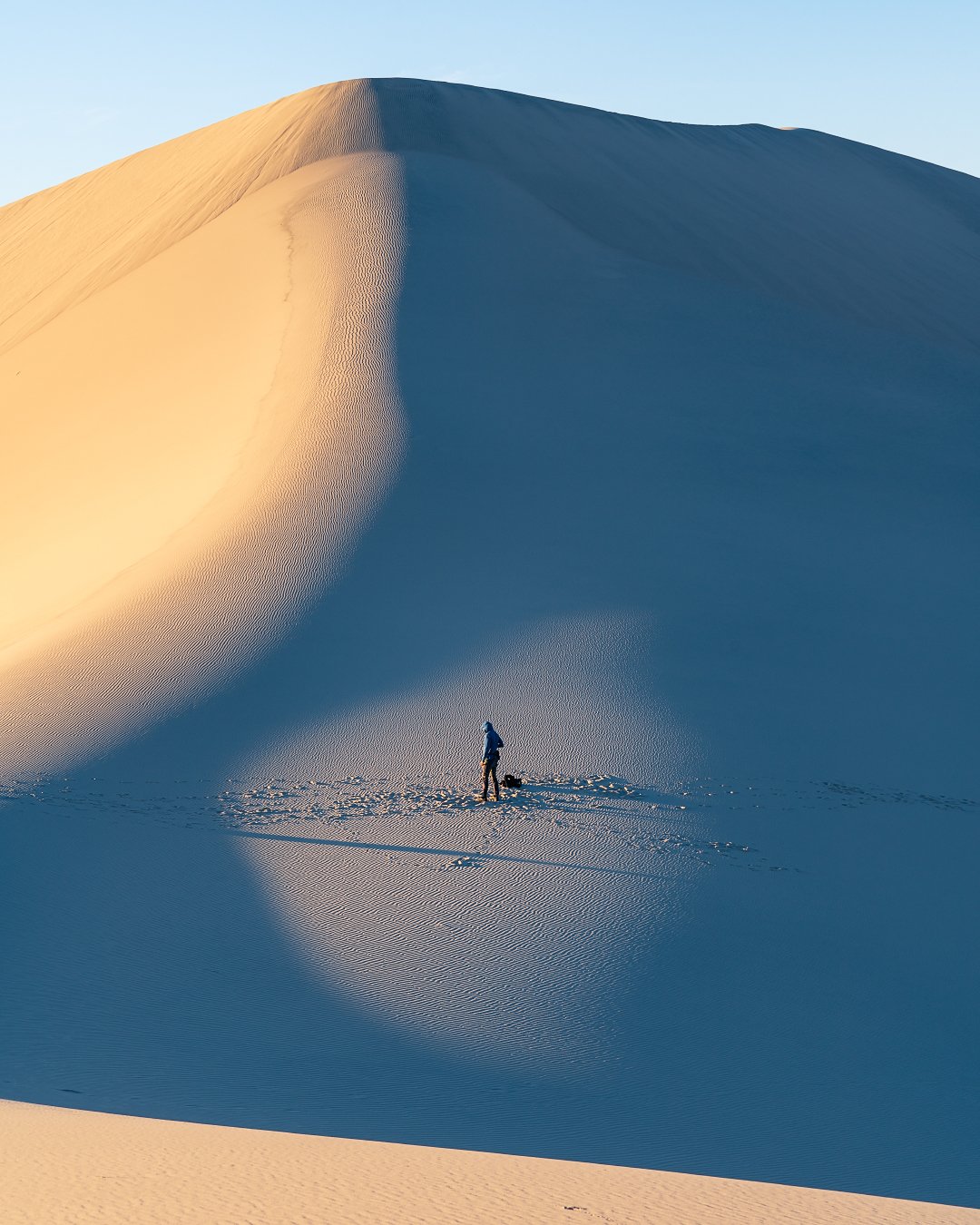
photographing motorcycles and riders within the landscape
capturing moments that convey the feeling of travel and exploration
telling a visual story of an adventure through a series of images
refining compositions through small adjustments in position and perspective
capturing video footage that conveys movement, scale, and the feeling of being in the desert
working with the cameras and devices you already have — mirrorless, action cam, or phone
building a sequence of footage that tells the story of a day's ride
combining photos and video into a cohesive visual record of the journey
Because the group is intentionally small, there will be plenty of opportunities for individual guidance, discussion, and feedback while working in the field.
This workshop is not about racing from one location to another. It's about slowing down, paying attention, and learning how to photograph both the landscape and the experience of moving through it.

Itinerary
While we will have a planned route and a number of locations in mind, this workshop is designed to remain flexible.
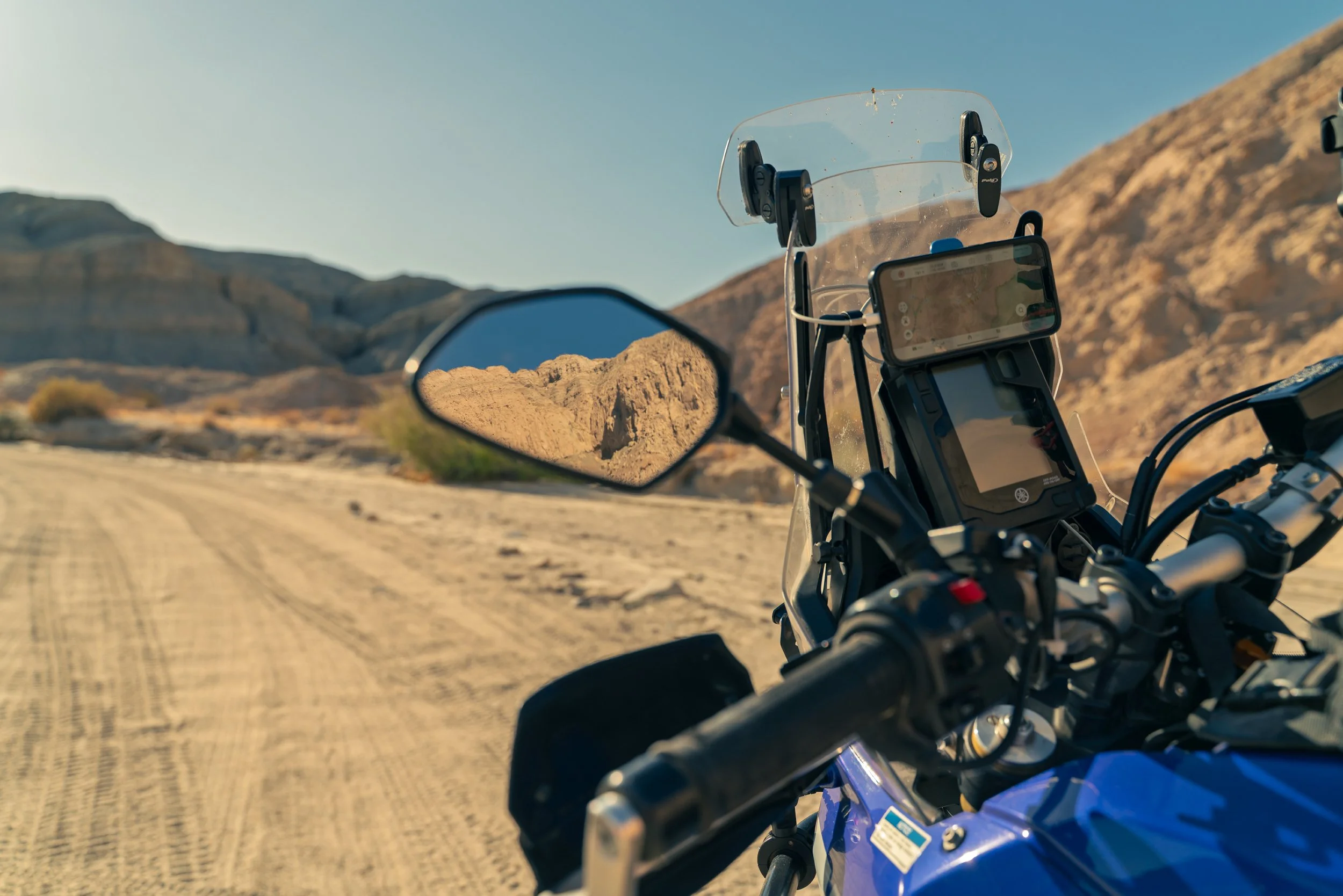
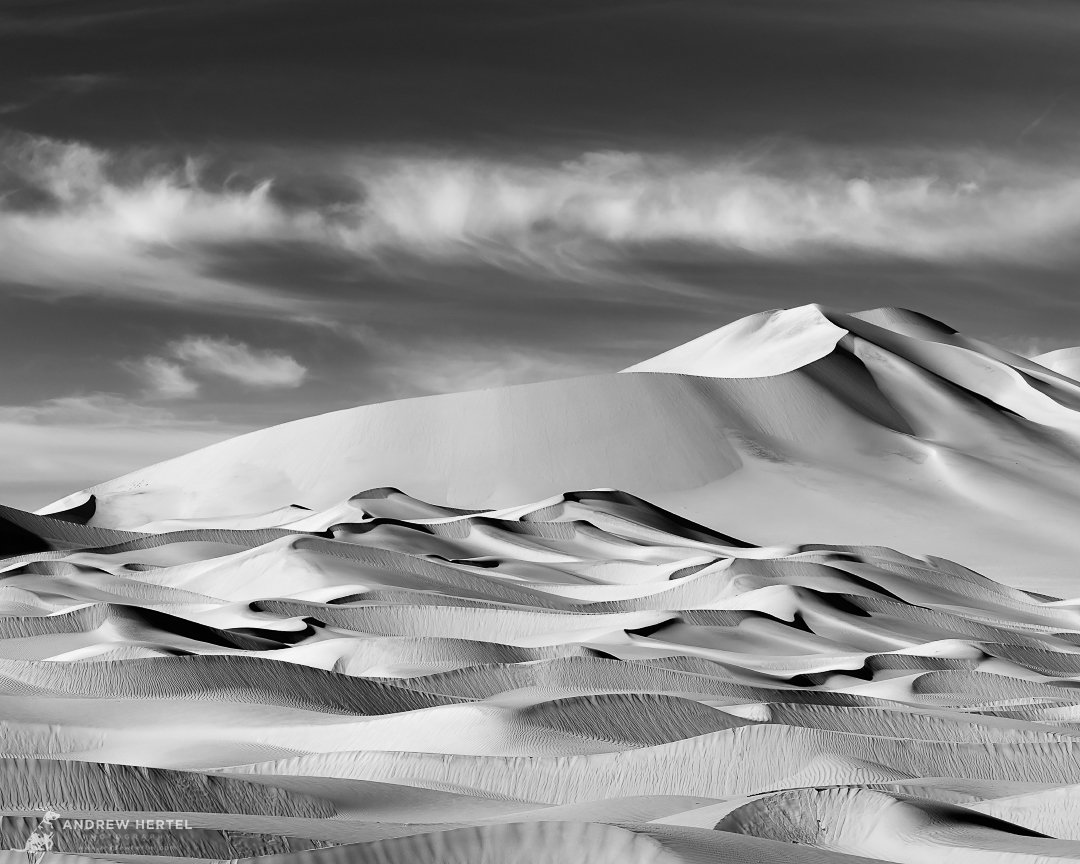
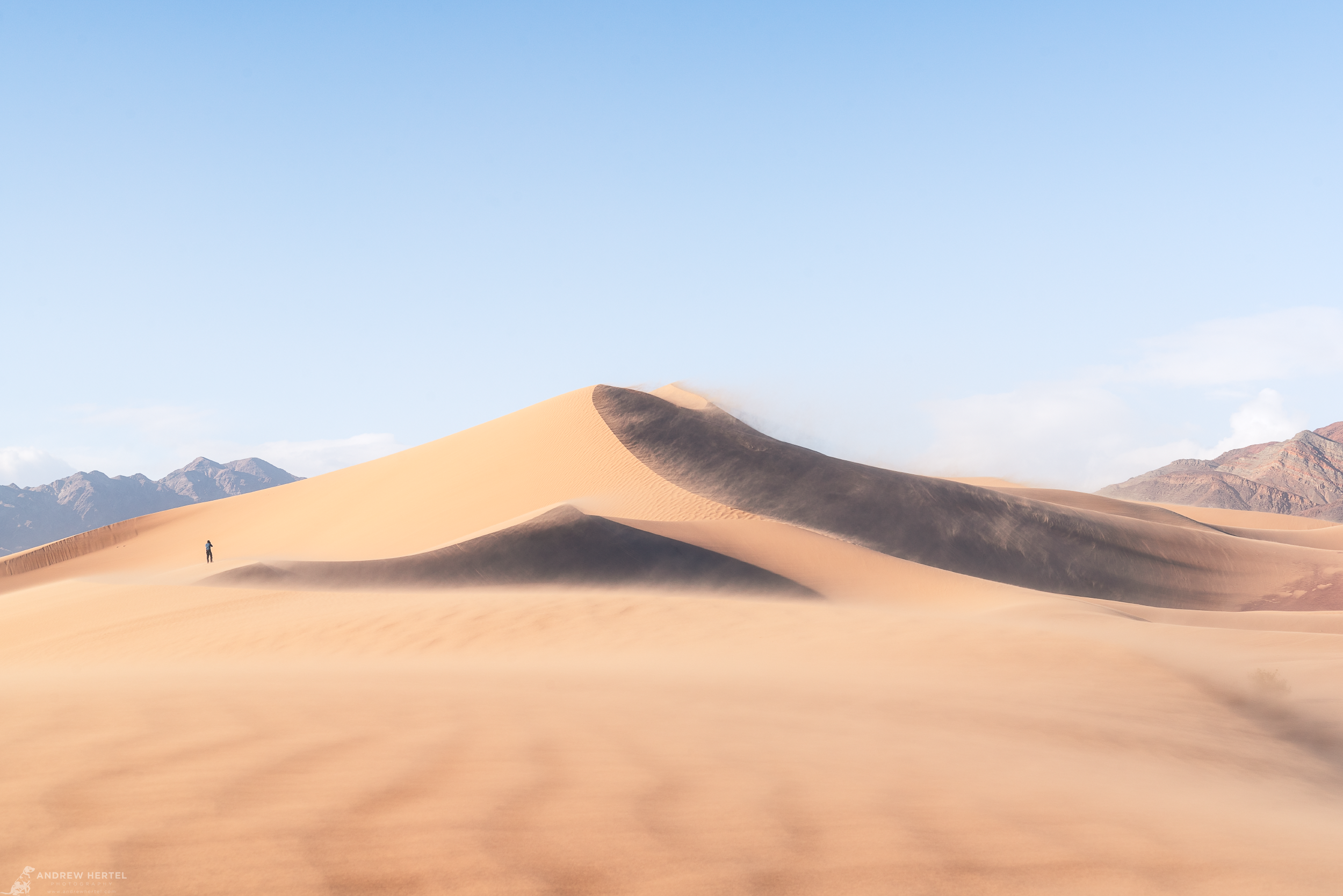
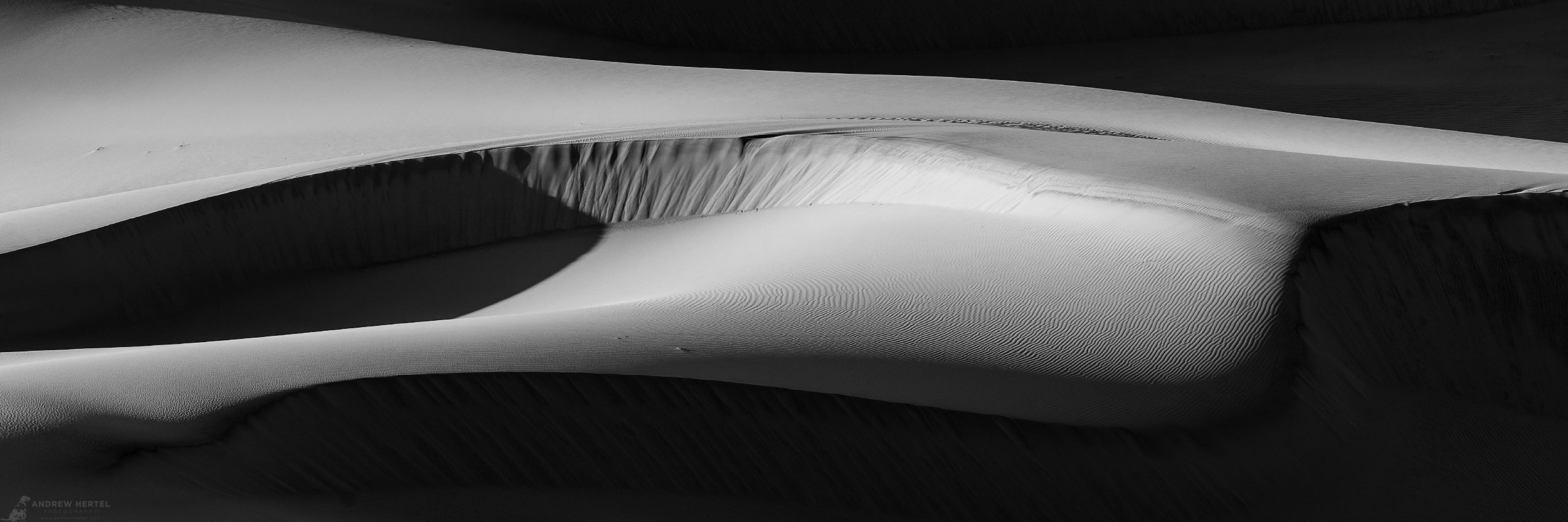
Our route takes us through some of Death Valley's most remote and visually striking terrain — places like the Racetrack Playa, the Eureka and Ibex Dunes, the Saline Valley road, and the open desert corridors that connect them. These aren't parking lot destinations. Getting to most of them requires miles of dirt road and a willingness to see where the light takes you.
Late February sits in the window when Death Valley's wildflowers can transform the desert floor — an unpredictable but spectacular backdrop that adds another dimension to both the riding and the photography.
Each day will have a general shape — early morning in the field before the heat builds, riding through the day with frequent stops to photograph and explore, and evenings at camp as the desert shifts into last light. But the specific rhythm will adjust based on conditions, weather, and what we find along the way.
A typical day may include:
early morning photography when the light is soft and the desert is quiet
riding scenic backroads through Death Valley and surrounding desert landscapes
stopping along the way to photograph interesting scenes, textures, and moments of the journey
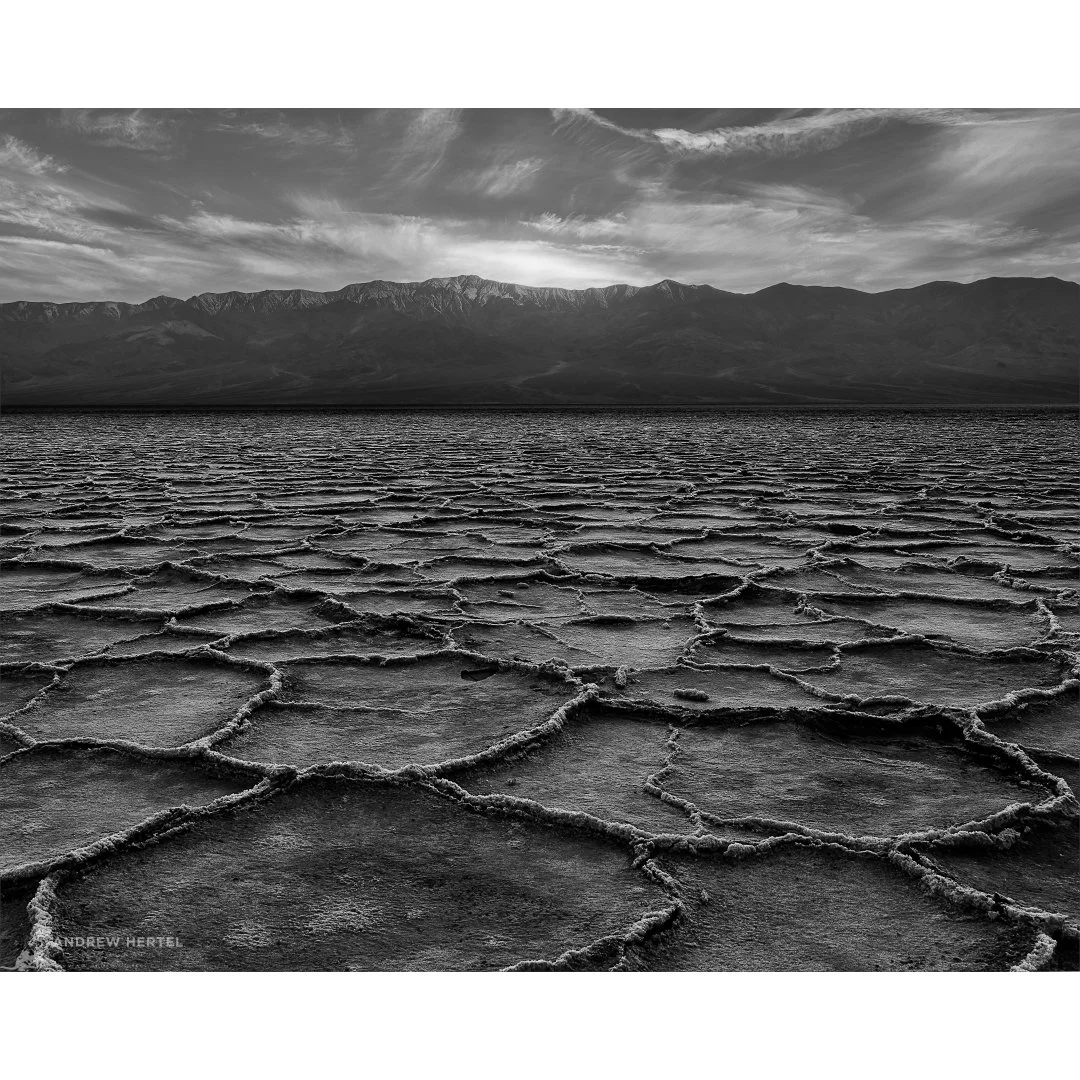
time to explore dunes, salt flats, canyons, and desert formations on foot
evening photography as the desert transitions into sunset light
camping together and sharing stories from the day
Because the workshop is centered around adventure travel, some of the most memorable moments often come from the unexpected. A change in weather, an interesting road, or a scene that catches our attention may shift our plans for the day. We'll resupply fuel and provisions as needed along the way, and a support vehicle is available in the event of an emergency.
Some of the best moments on a trip like this aren't on any map.

Thinking About a BDR?
If you've been watching Backcountry Discovery Route films and wondering what it would actually take to plan and ride your own multi-day backcountry route — this expedition is a good place to find out. Death Valley's dirt roads cover similar terrain to what you'd encounter on a BDR: remote, technical in spots, demanding on both rider and machine, and completely worth it.
Time it right and you may also find the desert in bloom, Death Valley's spring wildflower season can turn the valley floor into something you won't soon forget.
You'll leave with a clearer sense of whether your skills, your bike, and your gear are ready for something bigger. And you'll have the photos and footage to prove you were there.
What’s Included
Your workshop fee includes:
Photography and video instruction from Andrew Hertel and Seth Hamel
Field-based teaching focused on landscape photography and adventure storytelling
Guidance on photographing motorcycles and riders within the landscape
Small group experience limited to six participants
Access to locations and routes selected specifically for the workshop
Individual feedback and discussion while working in the field
A support vehicle available in case of emergency
The opportunity to travel and photograph alongside experienced adventure riders and photographers
What’s Not Included
Participants are responsible for all personal travel and trip logistics, including:
Motorcycle and fuel
Transportation to and from Death Valley
All meals and food
National Park entrance fees
Personal camping equipment
Motorcycle riding gear and safety equipment
Travel insurance including evacuation coverage (required)
Participants are also responsible for ensuring their motorcycle is in safe operating condition and suitable for the riding conditions we may encounter during the workshop.
Who This Workshop Is For
This workshop is designed for photographers who enjoy adventure and want to experience the landscape in a more immersive way.
It is a great fit for riders who:
enjoy exploring remote landscapes by motorcycle
want to improve their landscape and adventure photography while traveling
are interested in learning how to document a journey through photography and video
appreciate slowing down and spending time observing the landscape
have been curious about multi-day backcountry riding and want a guided introduction
No advanced photography experience is required. The workshop is open to photographers at a range of skill levels who are eager to learn and engage with the landscape.
Because much of our time will be spent outdoors in desert environments, participants should be prepared for varying weather conditions and terrain.
Riding Experience
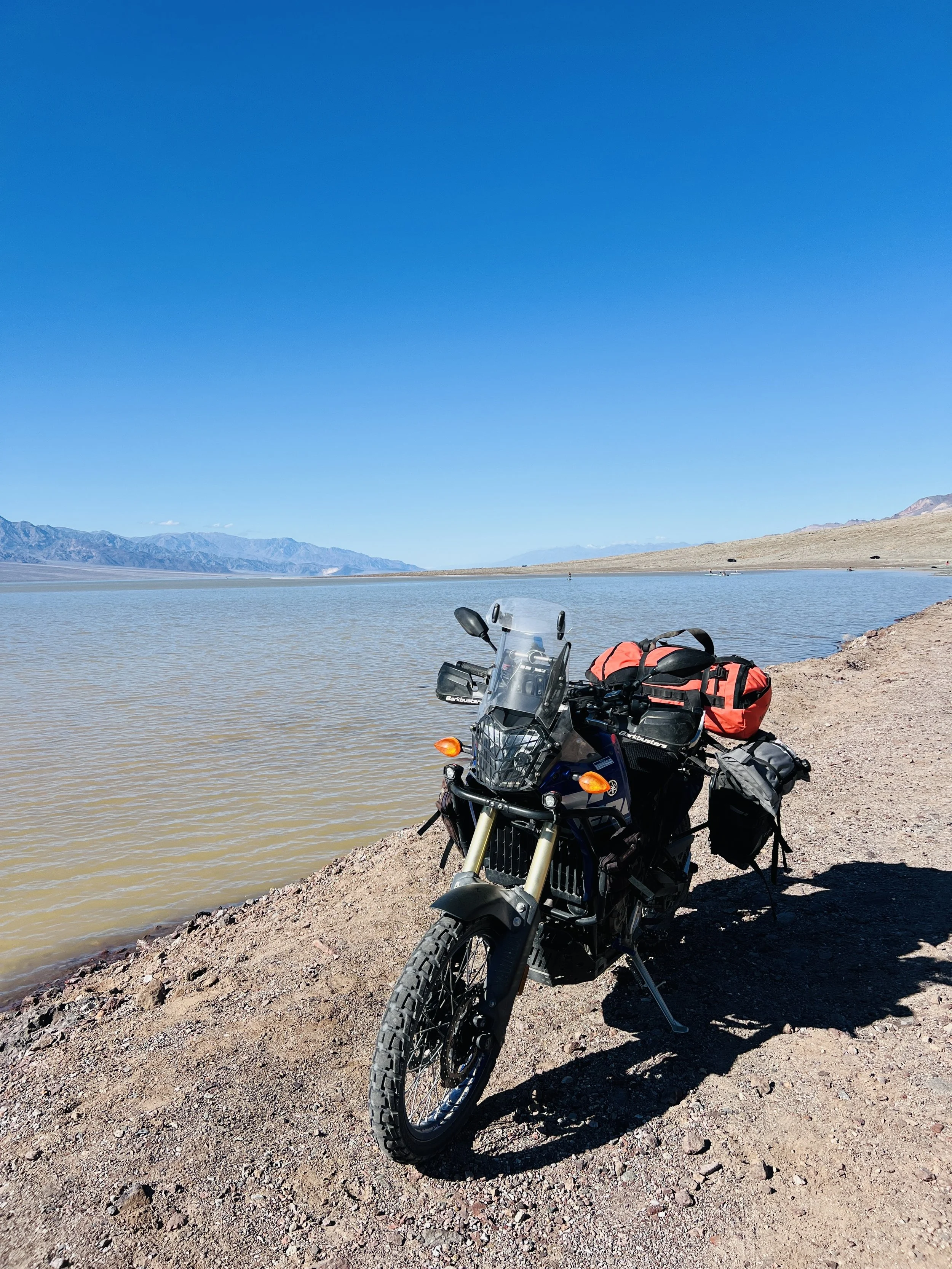
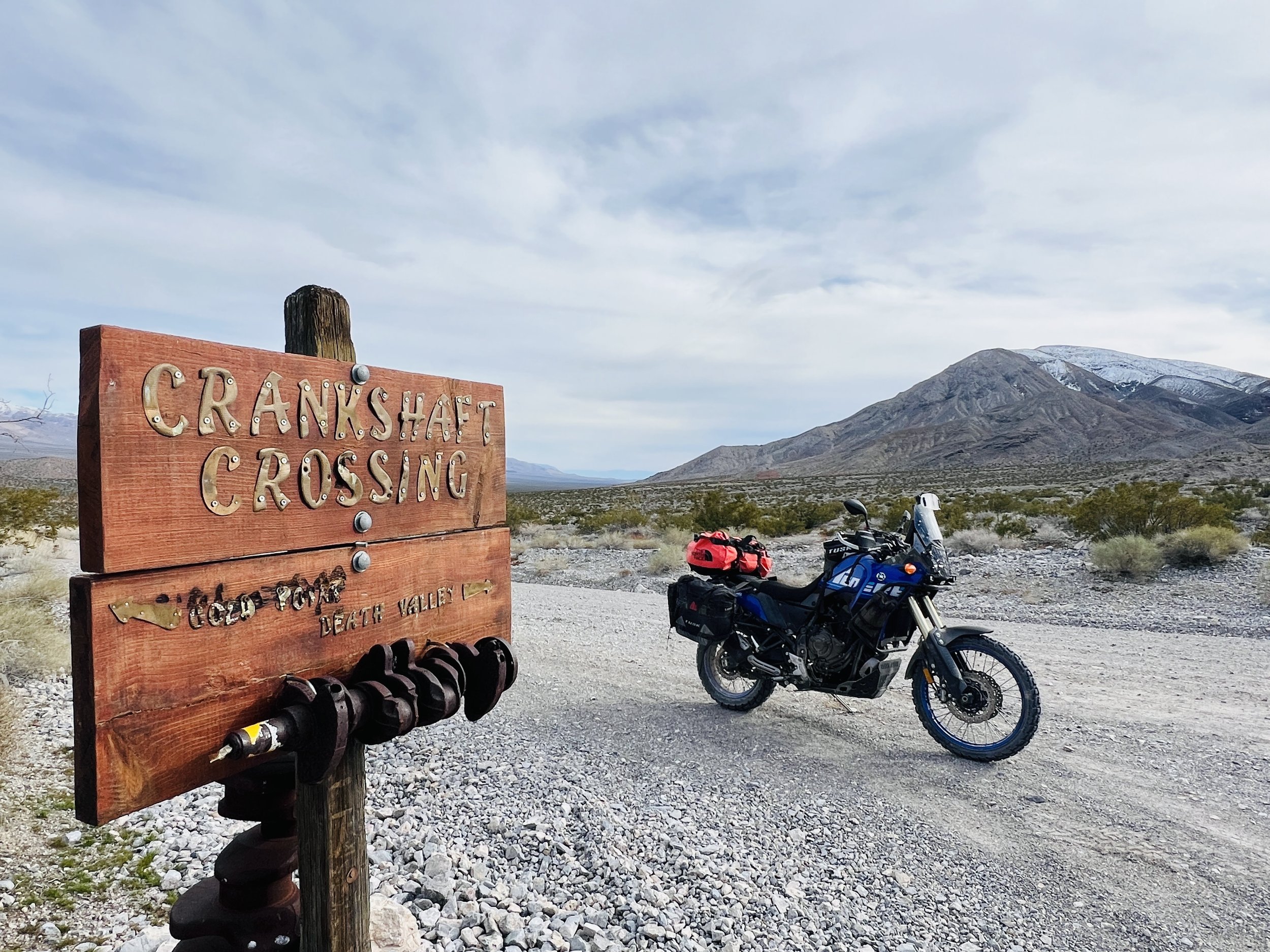
Participants should be comfortable riding for a full day on varied terrain. Our route includes stretches of pavement, graded dirt roads, loose and sandy sections, and some rocky or steep terrain that will require focus and confidence on the bike.
You don't need to be a seasoned off-road racer, but you should have real experience riding unpaved roads and feel comfortable managing your bike when conditions get less predictable. If you've done dirt road touring, gravel riding, or spent time on forest roads or desert two-tracks, you're likely in the right range.
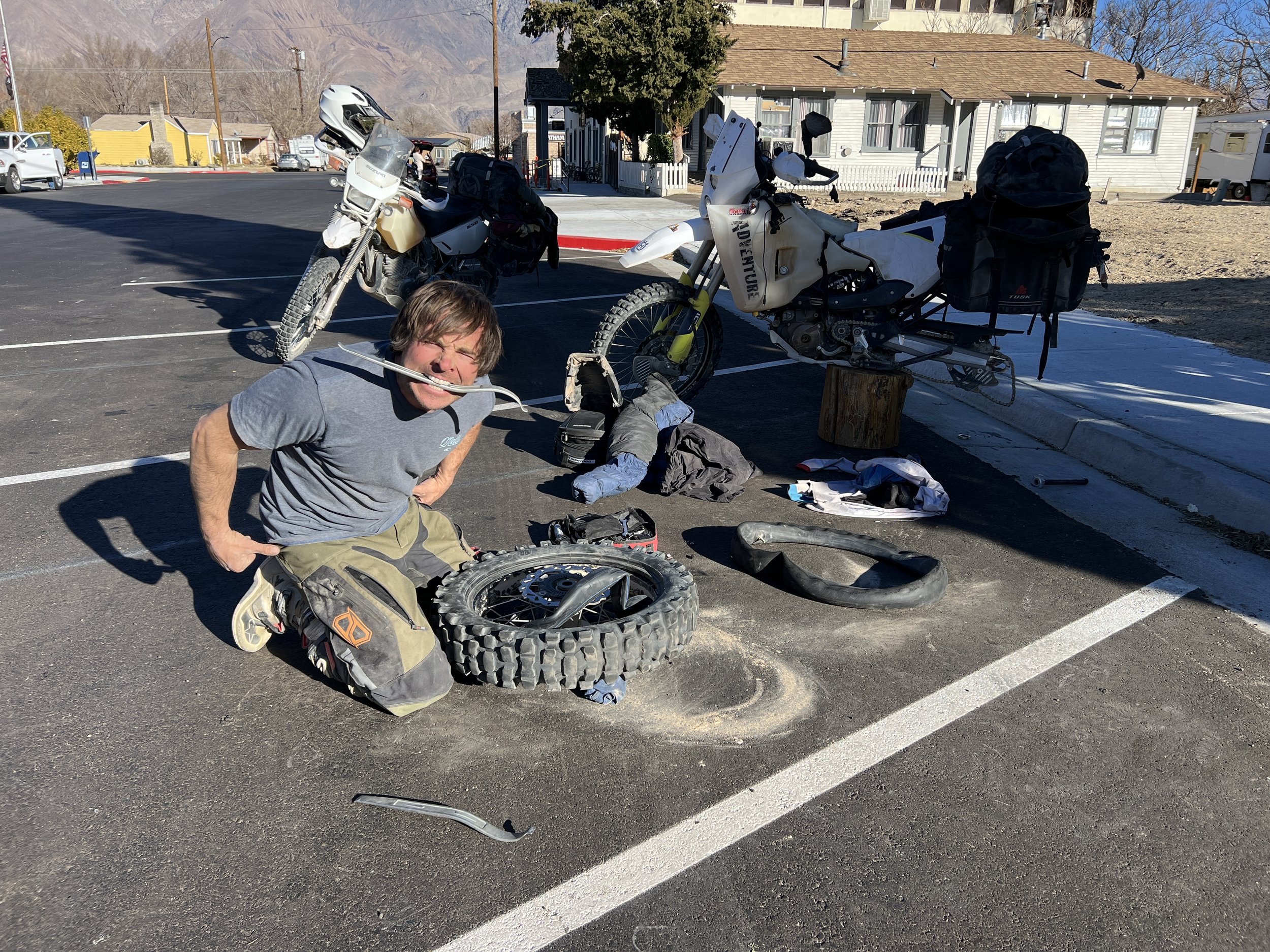
Participants should also be familiar with their motorcycle and able to perform basic roadside tasks such as changing a flat tire or handling minor mechanical issues if they arise. Participants are required to carry essential tools for roadside repairs and spare tubes.
If you're unsure whether your experience level is a good fit, reach out before registering. We'd rather have that conversation upfront than have someone out of their comfort zone fifty miles from pavement.
FAQ
Do I need to be an advanced photographer? No. This workshop is open to photographers of all experience levels. Whether you are just getting started or have years of experience, Andrew and Seth will provide guidance appropriate to your skill level.
What kind of motorcycle do I need? Participants should bring an ADV or dual-sport motorcycle that is plated for street use and comfortable on pavement and capable of riding rugged dirt roads, sandy sections, and occasionally rocky terrain commonly found in Death Valley. A minimum fuel range of 200 miles is recommended given the remote nature of some of our routes.
Do I need camping experience? Basic camping familiarity is helpful, but the workshop is designed to be relaxed and supportive. Participants are responsible for bringing their own camping equipment and personal supplies.
What camera equipment should I bring? Any interchangeable lens camera system works well. A range of lenses from wide angle to telephoto is helpful for photographing both landscapes and storytelling moments along the journey. Action cameras are great for capturing the ride itself. Cell phones work fine too. Since we will be in the National Park, leave the drone at home.
Can I join if I've never ridden a BDR but have been thinking about it? Absolutely — this expedition is a great introduction to multi-day backcountry riding. You'll get a real sense of the terrain, the logistics, and what it takes to plan and execute a route like this on your own.
Reserve Your Spot
This workshop is limited to six participants to ensure a personal experience and plenty of individual guidance in the field.
If the idea of exploring Death Valley by motorcycle, photographing the landscape, and learning to document adventure resonates with you, we’d love to have you join us.
Reserve your spot below to secure your place on the workshop.
Permits and Insurance
I obtain all necessary permits from the National Park Service to operate photography workshops in Death Valley. Additionally, I carry the required liability insurance to ensure a safe and professional experience for all participants.
Terms and Conditions for Attending a Workshop
By registering for this workshop, you agree to the following terms and conditions:
1. Payments and Deposits:
A non-refundable deposit is required to secure your spot. The remaining balance must be paid no later than 90 days prior to the workshop start date. Failure to complete payment may result in the forfeiture of your spot.
2. Cancellations and Refunds:
If you cancel 90 days or more from the workshop start date, you will receive a full refund minus your deposit. If you cancel 30–89 days from the workshop start date, 50% of your registration fee will be refunded. No refunds will be given for cancellations 29 days or less from the start date. No exceptions to this policy. To protect yourself, consider purchasing travel insurance.
If the workshop is canceled by Andrew Hertel for any reason, you will receive a full refund of the registration fee or your payment will be credited towards a different workshop.
3. Travel Insurance:
Participants are required to purchase travel insurance including evacuation coverage to cover unforeseen circumstances such as cancellations, medical emergencies, or travel delays.
4. Physical Requirements:
This workshop requires moderate physical fitness. Participants must be capable of hiking up to 2 miles over uneven terrain, including sand dunes. Please consult your physician if you have concerns about your ability to meet these requirements.
5. Weather Considerations:
While every effort is made to plan for ideal weather conditions, participants should be prepared for all types of weather, including hot, cold, rain, or snow. What some may consider "bad" weather often provides excellent photographic opportunities.
6. Liability and Safety:
By attending, you acknowledge that outdoor activities involve inherent risks. The organizer assumes no liability for injuries, illnesses, accidents, or loss/damage to personal property during the workshop. By registering for the workshop you are acknowledge you agree to the terms and conditions for Andrew Hertel Photography.
7. Permits and Compliance:
This workshop is conducted with the necessary permits from the National Park Service and complies with all applicable regulations. The organizer carries liability insurance for added protection.
8. Code of Conduct:
Participants are expected to act respectfully toward others, including fellow attendees, the instructor, and the environment. Failure to adhere to this code of conduct may result in removal from the workshop without a refund.









Still have questions that weren’t answered in the workshop description, please send me a message.

Who Am I?
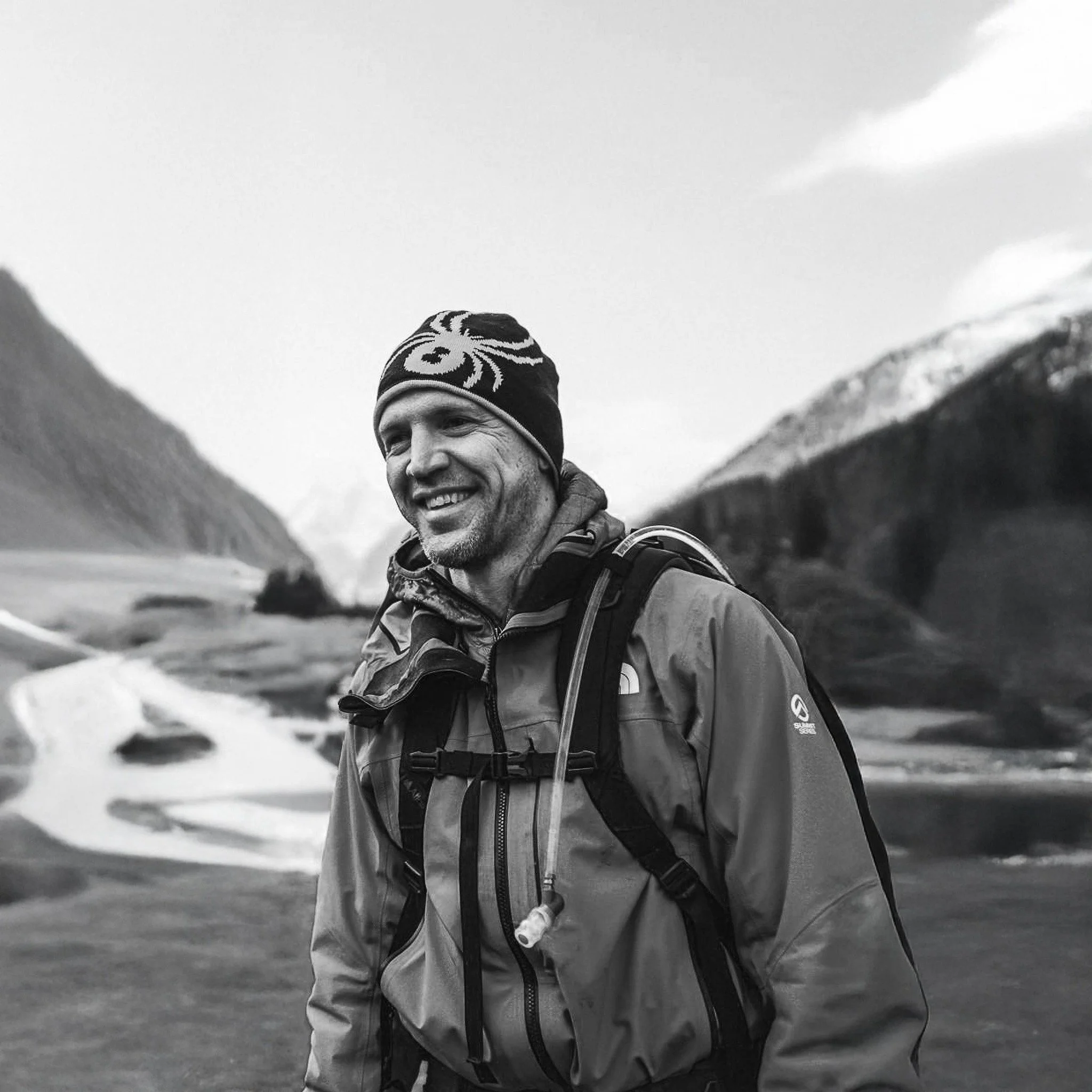
Hi, I’m Andrew Hertel, one of your guides for this Death Valley photography workshop. I’ve been exploring Death Valley for years, captivated by its ever-changing light, expansive dunes, and rugged beauty. Having lived in Southern California for over two decades, I’ve had countless opportunities to immerse myself in the park’s diverse landscapes.
I am Wilderness First Aid certified, ensuring that your safety is always a top priority during our time together. As a proud member of Nature First, I practice and teach Leave No Trace principles to promote responsible outdoor ethics and minimize our impact on these fragile environments.
My passion for the desert is reflected in my work, and I’m excited to share that connection with you—helping you not just capture stunning images but also experience the landscape in a meaningful way.